We compared zirconia and titanium dental implants across 10-year survival rates, aesthetics, metal allergy risk, and clinical scenarios. An evidence-based guide from BestDent Istanbul.
Titanium is the 50-year clinical gold standard; zirconia has offered a metal-free alternative for the past 15 years. Here is what your dentist should recommend and why. If you are considering dental implant treatment in Turkey, material choice is one of the first decisions to settle before your consultation.
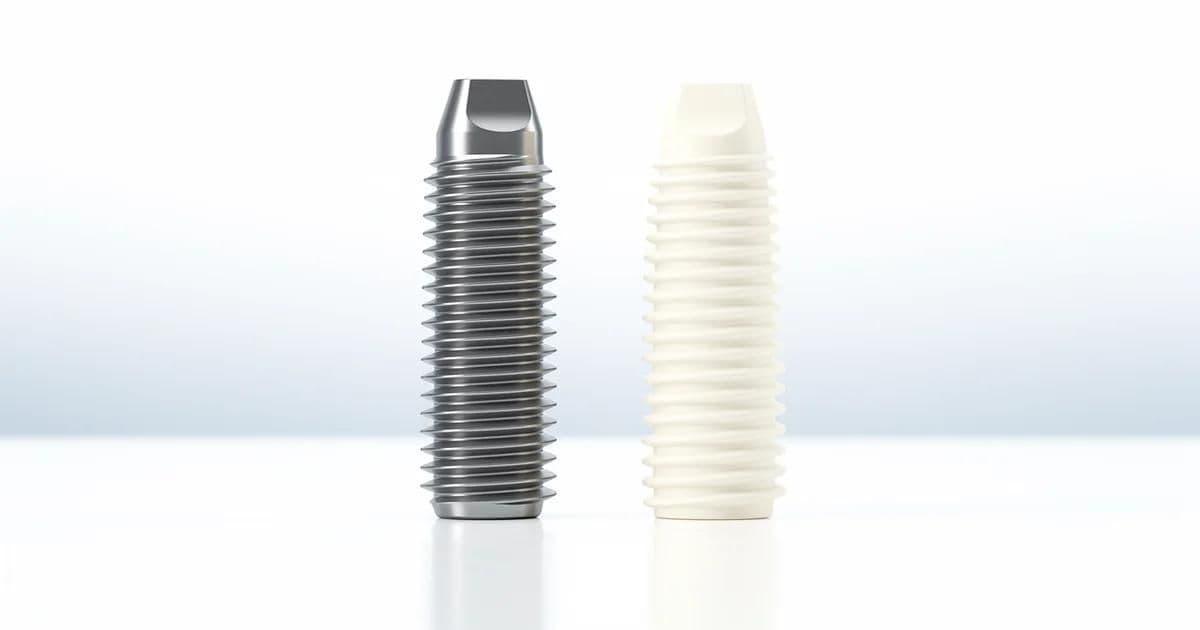
Titanium dental implants are the 50-year clinical gold standard with 10-year survival rates of 95–98%. Zirconia (zirconium dioxide) is a metal-free ceramic alternative with 93–95% 10-year survival; preferred for anterior aesthetics and patients with metal sensitivity, but it is more brittle and less suited to molar positions or bruxism cases.
Summary Comparison Table
Feature
Titanium
Zirconia
Material class
Commercially pure titanium (Grade 4) or Ti-6Al-4V alloy (Grade 5)
Predominantly one-piece; newer two-piece options available
Aesthetic risk
Possible grey line showing through thin gums
None — colour matches natural tooth
Fracture risk
Very low
Higher (ceramic brittleness)
Cost category
Standard — widely available
Premium — higher raw material cost
What Are We Actually Comparing? Implant Body vs Crown
One clarification before the material comparison — it resolves most confusion: when we say "zirconia implant", we mean the implant body — the part that replaces the tooth root — not the crown.
A dental implant has three components:
Implant body: The screw placed into the jawbone, replacing the tooth root
Abutment: The connector linking the implant body to the crown
Crown: The visible part in the mouth that replicates a natural tooth
Placing a zirconia crown on a titanium implant body is very common, more economical, and is not what this article compares. This guide compares an entirely zirconia-made implant body against a titanium implant body. On abutments: titanium abutments are most frequently used; zirconia or ceramic abutments may be preferred in anterior aesthetic cases.
Material Science: Titanium vs Zirconium Dioxide
Titanium implants are made from commercially pure titanium (Grade 4) or Ti-6Al-4V alloy. Zirconia implants are made from yttrium-stabilised zirconium dioxide (Y-TZP), a dense ceramic. Both materials osseointegrate with the jawbone and are biocompatible, but their mechanical and aesthetic properties differ significantly.
Titanium and zirconium dioxide are chemically and structurally very different; those differences directly affect how your jaw accepts them and how long they last.
Titanium: The 50-Year Gold Standard
Two main types of titanium are used in dental implants: commercially pure titanium (Grade 4, 99%+ purity) and Ti-6Al-4V alloy (Grade 5, containing aluminium and vanadium). The spontaneously formed passive titanium dioxide oxide layer on the surface is the primary reason for biocompatibility — this thin oxide layer allows bone to attach directly to the surface. Since Brånemark's osseointegration discovery in 1965, titanium implants have over 50 years of documented clinical history. No implant material has as broad a dataset for biocompatibility testing, long-term follow-up studies, and revision protocols (Al-Nawas et al. 2022).
Zirconium Dioxide: The Ceramic Alternative
Zirconia dental implants are made from a dense ceramic called zirconium dioxide (ZrO₂) — it is not a metal. The most common formulation is called yttrium-stabilised tetragonal zirconia polycrystal (Y-TZP). Derived from a naturally occurring mineral, zirconium dioxide received FDA 510(k) clearance in 2011. Being a newer material means its long-term clinical dataset is shorter than titanium's — approximately 15 years of documented clinical outcomes exist. Zirconia's tooth-like colour and ceramic surface provide a clear advantage particularly in the anterior region and for patients with metal sensitivity.
Shared Properties
Both materials achieve osseointegration with the jawbone (bone grows directly onto the surface). Both meet ISO 10993 biocompatibility standards. Both carry CE marking and FDA clearance.
Pros and Cons of Each Material
Each material has its own advantages and disadvantages. Here they are, listed honestly.
Titanium — Pros
50-year clinical history and 95–98% long-term survival rate
Ductile structure — does not fracture under bruxism loading
Suitable for every position (molar to anterior)
Two-piece design options provide prosthetic flexibility (angulation correction)
Standard cost category — accessible across a wider budget range
Proven osseointegration in thin or compromised bone
Widest abutment and prosthetic ecosystem
Titanium — Cons
Grey colour may show as a grey line through thin gums (problem in aesthetic zone)
Very rare metal allergy (<1%) — but possible
Theoretical galvanic corrosion concern with dissimilar metals in the mouth
"Metal anxiety" in some patients — not clinical, but a psychological factor
Zirconia — Pros
Metal-free (hypoallergenic) — the only option for confirmed titanium allergy
Tooth-coloured — does not cast a grey shadow through the gum
Less plaque accumulation per the Roehling 2018 meta-analysis — biological advantage for periodontally sensitive patients
Valuable for patients seeking treatment aligned with biological/holistic dentistry principles
Superior aesthetic outcome in the anterior region and thin gingival biotype
Natural choice for patients seeking a metal-free implant
Zirconia — Cons
Short clinical dataset (~15 years vs titanium's 50+)
More brittle — can fracture under excessive load (ceramic behaviour)
Fewer prosthetic options — most designs are one-piece, limiting flexibility for angulation correction
Historically higher failure rates in early-generation two-piece zirconia designs (Cionca et al. 2023)
Premium cost category — high raw material and manufacturing costs
Fewer surgeons with specialist training in ceramic implant placement
Long-Term Survival, Complications, and Design Caveats
Titanium dental implants show 95–98% 10-year survival per Pjetursson et al. meta-analyses. Zirconia implants have 93–95% 10-year survival per Roehling et al. 2018 data, with design-dependent variation — one-piece designs outperform early two-piece designs. Peri-implantitis is the leading long-term failure cause in both materials.
Both materials work, but they do not fail the same way. As of April 2026, the available 10-year literature shows exactly this:
The Roehling et al. 2018 meta-analysis reported one-year zirconia implant survival at 92.0% and five-year survival in the 89–95% range across studies. Hashim et al. 2016 found 94.1% at two years and 84% at 7+ years — design-dependent variation is substantial. Cionca et al. 2023 detailed design-dependent outcomes in newer two-piece zirconia data. The titanium baseline is consistently 95–98% 10-year survival in Pjetursson meta-analyses.
Failure Modes
Titanium: The leading cause is peri-implantitis (bacterial inflammation) — the most common long-term failure mode, approximately 15–20% prevalence at 10 years (Derks and Tomasi 2015). Fracture is very rare. Zirconia: The leading cause is fracture — particularly in narrow-diameter two-piece designs. Surface chipping around the tooth can occur. Peri-implantitis incidence is lower because the ceramic surface accumulates less plaque (Roehling 2018). Osseointegration failure in compromised bone is under 5% for both materials.
One-Piece vs Two-Piece Zirconia — An Important Caveat
Historical zirconia failure data is skewed by early-generation two-piece designs. Modern one-piece zirconia implants (Straumann PURE, NobelPearl, Patent) perform significantly better than those early designs. If you are considering zirconia, always ask whether the implant is one-piece or two-piece and how long the manufacturer has been producing that specific design. This detail can directly affect your 10-year outcome.
Revision Outcomes
Failed titanium implant → typically replaced with a new titanium implant after bone healing (3–6 months). Failed zirconia → same protocol, but fewer clinicians have zirconia revision experience. Honest note: zirconia revision data is still an evolving area. At our Istanbul clinic, the large majority of titanium revision cases are completed successfully with standard protocol; zirconia revision remains the exception for us, and we analyse the underlying cause (loading, design, patient factor) in every case first.
Metal Allergy, Biocompatibility, and the Holistic Patient Question
True titanium allergy affects approximately 0.6% of implant patients and can cause peri-implant inflammation or unexplained implant failure. Zirconia implants are metal-free and hypoallergenic; they are the only clear option for confirmed titanium allergy. Where undiagnosed sensitivity is suspected, MELISA testing allows confirmation before the material decision is made.
For a small patient subgroup — confirmed metal allergy, suspected sensitivity, or holistic health values — material selection is non-negotiable.
Confirmed Titanium Allergy
Per Sicilia et al. 2008 data, true titanium allergy prevalence is approximately 0.6%. Symptoms include persistent peri-implant inflammation, unexplained implant failure, and skin or mucous membrane reactions. MELISA testing (lymphocyte transformation analysis) and patch testing are used for diagnosis. If confirmed → zirconia is not optional; it is indicated.
Suspected Sensitivity vs Holistic Preference
Many patients report "metal sensitivity" without a confirmed diagnosis. Evidence on subclinical effects is limited. Patients following biological/holistic dentistry principles (Klinghardt protocol, IAOMT guidelines, etc.) typically prefer metal-free implant options out of caution. We respect that preference — but we also feel obliged to be transparent: choosing zirconia on a preference basis means accepting a shorter clinical dataset and a slightly higher fracture risk. That is an informed decision, not a wrong one.
Biocompatibility
Both materials pass ISO 10993 biocompatibility standards. Titanium's oxide layer is bioinert and has been studied for 50+ years. Zirconia's ceramic surface is similarly bioinert and shows lower plaque affinity per Roehling 2018 — a tangible biological advantage for periodontally sensitive patients. Per Al-Nawas 2022 data, neither releases clinically meaningful ion levels under normal conditions.
Clinical Scenarios: Which Material Suits Which Case
Choose titanium for molars, bruxism, full-arch cases, and thin bone — its ductility handles the load and it has a 50-year clinical history. Choose zirconia for the anterior aesthetic zone (no grey line through the gum), confirmed titanium allergy, and patients who prioritise metal-free material values. For suspected metal sensitivity, confirm with MELISA first.
The right material depends on WHERE the implant is going, WHO you are, and HOW you use your teeth. This is the decision framework we use at BestDent:
Your situation
Recommended material
Why
Anterior tooth (aesthetic zone), thin gum
Zirconia
No grey line at the gum margin; tooth-coloured ceramic matches the natural root silhouette
Molar (heavy chewing)
Titanium
Ductile metal handles 250+ N occlusal load without fracture risk
Confirmed bruxism / clenching
Titanium
Zirconia brittleness + parafunctional load = fracture risk (~92% survival in bruxists vs 95% generally)
Confirmed titanium allergy
Zirconia
The only viable option — metal-free
Suspected metal sensitivity (unconfirmed)
Test first (MELISA); negative → titanium, positive → zirconia
More diameter/length options; broader surface-treatment evidence for integrating bone
Holistic dentistry preference
Zirconia (informed decision)
Patient values metal-free; shorter track record is accepted
Single upper central incisor, thick gum, young patient
Either can work — aesthetic preference
Both can deliver excellent results; preference and budget decide
Anterior Aesthetic Zone
Zirconia wins here. In a thin gingival biotype, titanium creates a grey line risk; gum recession over the years can expose the metal. Soft tissue biotype assessment must be done at consultation — if a thick biotype is confirmed, titanium is also a safe choice. But when in doubt, or if the patient wants to minimise aesthetic risk, zirconia is the safer preference.
Bruxism and Heavy Chewers
Bruxism is the scenario where zirconia is at its weakest. Zirconia survival in bruxists is approximately 92% versus 95% in the general population. A night guard protocol reduces the risk but does not eliminate it. Our honest recommendation: titanium for confirmed bruxists. At our Istanbul clinic we have seen, over the years, zirconia implant patients return with ceramic fracture — rare, but it happens. We are therefore conservative with bruxist patients.
Full-Arch Cases
In All-on-4 cases and All-on-6 treatment, the current gold standard is titanium implants + zirconia bridge on top. Monolithic zirconia bridges on titanium implants distribute chewing load effectively while delivering the aesthetic advantage; you are not taking on the fracture risk at the ceramic implant-bone interface. If full-mouth implant treatment is planned, this combination is the default. Where bone is insufficient, bone grafting prepares the ground for titanium implants first.
Choosing by Brand
Material is half the decision — the manufacturer is nearly as important. Here is a tiered view of the brands currently in use:
Titanium Brands
Tier
Brands
Notes
Premium
Straumann (Switzerland), Nobel Biocare (Sweden/Switzerland), Astra Tech/Dentsply Sirona
30+ years R&D, broadest surface-treatment evidence, 5+ year manufacturer warranty
Mid-tier
Neodent (Straumann Group), MIS, Ankylos
Strong clinical data, shorter history, good value
Budget
Various Korean/Turkish brands
Use with care; verify 510(k)/CE + clinical data before accepting
Zirconia Brands
Tier
Brands
Notes
Premium
Straumann PURE Ceramic, NobelPearl (Nobel Biocare), Patent (Zircon Medical)
Longest zirconia clinical data, two-piece and one-piece options
Rising
Z-Systems (Switzerland), Neodent Zi (Straumann Group), CeraRoot
Newer datasets, generally one-piece
BestDent's Preferred Combination
We use Straumann and Nobel Biocare titanium implants for all standard cases. For metal-free requests we offer Straumann PURE Ceramic and NobelPearl. We do not stock budget-tier zirconia implants — the fracture rate concern is still too close to the material design limit for our comfort. This is our clinical judgement; other clinics may think differently. When choosing a clinic in Turkey, verifying which brands are used should be at the top of your trust checklist.
For Patients Travelling from the UK: The NHS Gap and Care Coordination
Reading from the UK? Here are the points that are specifically relevant for material choice:
The NHS Coverage Reality
The NHS does not routinely fund dental implants — titanium or zirconia — for cosmetic replacement. Implants typically fall under Band 3 private treatment or NHS exemption. Health tourism to Turkey can cost a fraction of UK private rates; that cost advantage does not mean a quality compromise.
Why Getting the Material Right Matters More
If you are flying to Istanbul for treatment, you want to get the material right first time — a revision means a new trip. That is why we do a full video consultation before treatment: bite analysis for bruxism risk, soft tissue assessment for aesthetic zone cases. An incorrect material choice creates not just clinical but logistical cost.
Care Coordination with Your UK Dentist
Both titanium and zirconia implants require the same follow-up protocol: 3-month check, 1-year radiograph, annual hygiene visit. BestDent sends your UK dentist a full digital treatment record — CBCT, implant passport, torque values, healing timeline — in English, so they can manage ongoing care. This protocol applies to both materials and is a core part of our service. See our post-implant care protocol guide for details.
BestDent's Approach to This Question
Every clinic has a preference. Here is ours, transparently:
Our default is Straumann or Nobel Biocare titanium. It is the best-evidenced material, works across the widest range of cases, and carries the strongest manufacturer warranty. We have placed thousands of implants over more than 25 years; our clinic consistently achieves 95%+ success rates. That figure is not an advertisement — it is a baseline: an indication of what titanium implants can deliver in the right hands with the right protocol.
We recommend zirconia in three scenarios: confirmed titanium allergy, the anterior aesthetic zone in patients with a very thin gingival biotype, and informed patients following holistic dentistry principles. We decline to place zirconia in confirmed bruxists and molar positions — we believe the fracture risk outweighs the aesthetic advantage. This is not a rigid policy; it is our clinical judgement.
If you would like a material recommendation specific to your case, we offer a free video consultation. No pressure — many UK patients return after consulting 2–3 clinics, and that is entirely normal. The more options you compare, the more confident your decision.
Conclusion
Titanium remains our default for most dental implant cases — 50 years of evidence, 95–98% 10-year survival, and the flexibility to handle molars, bruxism, and full-arch cases. Zirconia is the right choice for the anterior aesthetic zone in patients with thin gums, confirmed titanium allergy, and informed holistic dentistry preferences. The honest answer: it depends on your case.
If you would like a material recommendation specific to your situation — including review of your CBCT scan and bite analysis — you can book a free video consultation with our clinical team. Get in touch for your personalised quote →
Author: Mert Batur — Founder of BestDent Ataşehir. Supporting international dental patients through treatment in Turkey's private clinics for 25+ years. This article has been reviewed by the BestDent clinical team: senior implantologist (DDS, 20+ years) and prosthodontist (DDS, MSc, 15+ years).
References:
Roehling S, Schlegel KA, Woelfler H, Gahlert M. (2018). Performance and outcome of zirconia dental implants in clinical studies: A meta-analysis. Clin Oral Implants Res. PubMed
Hashim D, Cionca N, Courvoisier DS, Mombelli A. (2016). A systematic review of the clinical survival of zirconia implants. Clin Oral Investig. PubMed
Cionca N, Hashim D, Mombelli A. (2023). Two-piece zirconia implants: clinical long-term outcomes. Clin Oral Implants Res. PubMed
Al-Nawas B, Hangaard S, Munksgaard EC. (2022). Biocompatibility review of titanium and zirconia dental implants. PubMed
Sicilia A, Cuesta S, Coma G, et al. (2008). Titanium allergy in dental implant patients. Clin Oral Implants Res. PubMed
Straumann PURE Ceramic Implant official product documentation. Straumann
Frequently Asked Questions
Neither is universally better. Titanium is appropriate for molars, bruxist patients, and full-arch cases with its 50-year clinical history. Zirconia is appropriate for the anterior aesthetic zone and patients with metal sensitivity. Most patients with healthy bone achieve the best results with titanium; specific scenarios shift the decision toward zirconia.
Both are safe and biocompatible per ISO 10993 standards. Zirconia is metal-free and accumulates less plaque, which benefits periodontally sensitive patients. Titanium has a 50-year safety record and a rare allergy rate (~0.6%). "Safer" depends not on the material but on your specific risk profile.
Current 10-year data shows zirconia at 93–95% and titanium at 95–98% survival. The gap is small but real, and zirconia's clinical dataset spans ~15 years while titanium's exceeds 50. One-piece zirconia designs perform better long-term than early two-piece designs.
Yes — ceramic is more brittle than metal. Fracture risk increases with bruxism, clenching, and narrow-diameter two-piece designs. Modern one-piece zirconia from reputable manufacturers (Straumann PURE, NobelPearl) has lower fracture rates, but we still do not recommend zirconia for confirmed bruxists.
Patients with confirmed titanium allergy (MELISA positive), patients with a thin gingival biotype in the anterior aesthetic zone, and informed patients following holistic dentistry principles who accept the shorter clinical dataset. For most other cases, titanium is the default choice.
True titanium allergy is rare — approximately 0.6% per Sicilia et al. 2008. Symptoms include persistent peri-implant inflammation, skin reactions, and unexplained implant failure. If you have a history of metal sensitivity, MELISA blood testing can confirm before implant placement.
Yes. Zirconia implants are made from zirconium dioxide (ZrO₂), a ceramic — not a metal. The common point of confusion: "zirconium" as a chemical element is a metal, but "zirconium dioxide" (the implant material) is a ceramic oxide and behaves entirely differently — bioinert, non-conductive, tooth-coloured.
Titanium. Molars handle 250+ newtons of occlusal load during chewing. Titanium's ductility absorbs that load without cracking. Zirconia's ceramic brittleness increases the likelihood of chipping or fracture under sustained molar loading. Titanium is the clear choice for molars.
Yes. Zirconia implants cost more than titanium because raw material and manufacturing costs are higher. Premium-tier zirconia such as Straumann PURE or NobelPearl sits at the upper end of the price range. Contact us for a personalised quote tailored to your specific case.
Yes. At BestDent Istanbul we offer Straumann PURE Ceramic and NobelPearl zirconia implants. We recommend a video consultation first to confirm that zirconia is clinically appropriate for your case — based on anterior aesthetic indication, confirmed titanium allergy, or informed preference.
Whether it's your first visit or you're a returning patient, our team is here to provide you with personalized care in a relaxed and friendly environment.