Is same day dental implant treatment in Turkey really possible in a single trip? Who qualifies, who doesn't — an honest 2026 guide backed by peer-reviewed evidence.
Author: Dr. Mert Batur, DDS — Member of the Turkish Dental Association (TDB), founding dentist at BestDent Ataşehir. Performing CBCT-guided dental implant procedures for the past 10 years. Last updated: 2026-04-23.
Same day dental implants in Turkey are possible for eligible patients: you leave the clinic on surgery day with a temporary tooth, and your permanent zirconia crown is placed 3–6 months later once osseointegration is complete. But the honest answer is this: not every patient is a candidate. Bone density, primary stability, and systemic health are the three critical gates that determine whether this protocol is right for you.
Quick answer: In Turkey, same day dental implants (immediate loading implants) allow eligible patients to leave the clinic with a temporary tooth on the day of surgery. The permanent restoration is placed 3–6 months later, once the implant has integrated with the bone. Candidacy depends on bone density, primary stability, and overall health — not every patient qualifies.
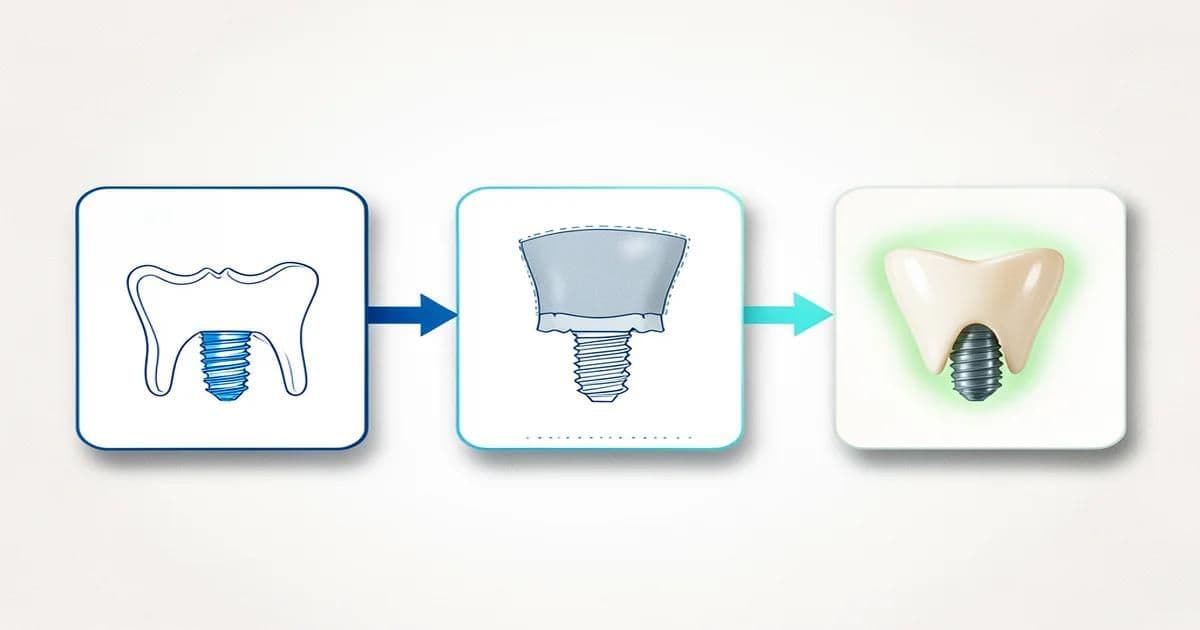
Same day dental implants (clinically known as immediate loading) is a protocol in which a temporary crown is attached to the implant on the very same session it is surgically placed. In other words, you don't go home toothless. However, this is a temporary crown — the permanent zirconia restoration is placed 3–6 months later, after the implant has osseointegrated (fused with the bone).
Marketing terminology in this area is frequently confused. "Same day," "immediate loading," "teeth in a day," "All-on-4" — these all refer to different things yet are routinely lumped together under the same headline. The table below will clear things up.
| Term | What It Means | Same Day Implant? |
|---|
| Same day implant / immediate loading | Surgery + temporary crown same day | YES — the subject of this article |
| Immediate placement (fresh socket) | Extraction + implant in same session | Sometimes — loading may still follow later |
| All-on-4 / All-on-6 | Full arch on 4–6 implants | Can use same day protocol |
| Teeth in a day | Marketing term, usually All-on-4 | Same concept, different name |
| Traditional delayed loading | Crown placed after 3–6 months of bone healing | NO |
The clinical timeline runs as follows: surgery and temporary crown on the same day → 3–6 months of osseointegration → permanent zirconia crown. Throughout this article, when we say "same day" we are referring to this first scenario. If you are new to the topic, our dental implants in Turkey guide covers the traditional protocol; for multiple missing teeth, the All-on-4 protocol page is more appropriate.
Primary stability is a mechanical measure of how firmly the implant grips the bone at the moment of placement. In clinical practice this is read as a torque value in Newton-centimetres (Ncm). The threshold in the literature for safe immediate loading is ≥35 Ncm[1]. Below that value, loading the implant causes micro-movement, and micro-movement prevents the implant from integrating with the bone.
At our clinic, the first thing we check before accepting a patient for the same day protocol is this number. If torque is sufficient, we proceed; if not, placing the implant but deferring loading is the safer choice. "Good surgery" alone is not enough for same day loading — bone quality, implant design, and applied torque must all be evaluated together.
The underlying physiology is as follows: in the first 2–4 weeks the bone sends new blood vessels and osteoblast cells to the implant surface. By weeks 12–16, the newly woven bone is replaced by stronger lamellar bone. By around week 24, osseointegration is effectively complete. When immediate loading is performed, this process continues uninterrupted — provided the temporary crown is not subjected to excessive load or lateral forces. That is why a soft-food diet is so critical during this period.
Implant design also matters. Modern implants with aggressive thread geometry (such as the Straumann BLX) can achieve high torque even in lower-density bone. Material selection is a separate decision — differences between zirconia and titanium implants are assessed based on your aesthetic expectations and clinical situation.
The comprehensive review in PMC5965071 clearly demonstrates[2]: loading an implant before adequate primary stability has been achieved multiplies the failure risk several times over. "Same day" is therefore a clinical gate, not a promise.
Whether you are a candidate involves a three-step assessment: CBCT (cone beam computed tomography) for bone density and volume, intraoral examination for gum health, and medical history for systemic status. If all three give the green light, the same day protocol can be considered. At our clinic this assessment takes around 45–60 minutes, and we do not approve any patient for same day treatment without a CBCT.
What does CBCT measure? It provides a three-dimensional image of your jaw, measuring the bone height, width and density at the implant site with millimetre precision. Bone classification runs from D1 (very dense) to D4 (very soft). The ideal range for same day protocols is D1–D3; achieving primary stability in D4 bone is difficult and delayed loading is generally preferred.
| Criterion | Eligibility Requirement |
|---|
| Bone density | D1–D3 (assessed by CBCT) |
| Primary stability | ≥35 Ncm torque value |
| Periodontal health | No active gum disease |
| Systemic health | Controlled (diabetes HbA1c <7) |
| Smoking | Ideal: non-smoker or quit 2 weeks prior |
| Compliance | Soft food + hygiene protocol adherence |
A misconception we frequently hear regarding systemic health is that "diabetics cannot be candidates." Controlled Type 2 diabetes (HbA1c <7) is not a barrier to same day implants; uncontrolled diabetes is. Similarly, taking blood pressure medication, receiving thyroid treatment, or having mild osteoporosis does not automatically exclude you — each case is assessed individually. The FDI World Dental Federation's implant protocol guidelines also support this individualised approach.
The final criterion is one that is often overlooked: compliance. Will you be able to adhere to a soft-food diet, hygiene protocol, and follow-up schedule for 3–6 months? If your answer is "I'm not sure," then delayed loading may be the safer option even if you are otherwise a candidate. If your bone volume is borderline — as it is for approximately one in four patients we see from the UK and EU — a bone graft assessment is required; this is a separate process.
Telling patients that same day implants are not suitable for everyone may look like a marketing disadvantage for a clinic. For us it is exactly the opposite: a failed implant in the wrong candidate costs far more — financially and physically — than ten successful implants in the right candidates. A dentist who has learned to say "no" is worth more to you than one who has learned only to say "yes."
The following situations are ones where we do not recommend the same day protocol:
- Heavy smokers — in patients who smoke 10+ cigarettes per day and have no intention of quitting, the osseointegration failure risk roughly doubles.
- Uncontrolled diabetes — if HbA1c is above 8, wound healing is seriously impaired.
- Severe bone loss — bone graft, sinus lift, or zygomatic implant alternatives must be considered; immediate loading is usually not possible.
- Active periodontitis — gum disease must be treated before any implant can be placed.
- Severe bruxism (tooth grinding/clenching) — night guards can be made but case-by-case evaluation is essential.
- Immunocompromised patients — those receiving active chemotherapy, long-term high-dose steroids, or immunosuppressive therapy after organ transplant.
- Patients unable to comply with a soft-food diet — for busy travellers in particular, 3–6 months of dietary discipline is a serious commitment.
Hearing that you are not a candidate can be disappointing, but the cost of an implant that fails within six months — both financially and physically — is far greater than the risk of making the wrong decision. Even if you are not a candidate, you still have options: delayed loading, pre-graft followed by implantation six months later, or advanced techniques such as zygomatic implants. Our article on implant failure signs also covers the early warning signals that both candidates and non-candidates should know.
One trip or two trips — the answer depends on the patient's clinical situation. For a patient with a single missing tooth and sound bone, a single trip is generally sufficient: you leave with a same day implant and temporary crown within 4–5 days, and we coordinate the permanent zirconia crown with your UK dentist 3–6 months later. For patients who need bone grafting, multiple extractions, or a full-arch All-on-4/6, a second trip is clinically far safer.
Approximately 60% of our UK and EU patients are able to manage everything in one trip. When we recommend two trips to the other 40%, the initial reaction is often disappointment; however, the complication rate of a complex case forced into a single trip is significantly higher than the same case spread across two visits. The goal of a single trip must not override a clinical decision.
| Situation | One Trip | Two Trips |
|---|
| Single missing tooth + good bone | ✅ Return with temporary tooth; permanent crown with UK dentist in 3–6 months | — |
| Bone graft required | — | ✅ Trip 1: graft + healing; Trip 2: implant |
| Full arch All-on-4/6 | Partial — return with temporary bridge | ✅ Second trip for permanent zirconia bridge |
| Multiple teeth + extractions needed | Assessment needed | ✅ Safer |
| Heavy smoker | — | ✅ Due to slower healing |
Here is a practical timeline. In the single-trip scenario you arrive in Istanbul (Day 1), CBCT and consultation (Day 2), surgery and temporary crown (Day 3), check-up and pre-flight care (Days 4–5). Total: 4–5 nights. In the two-trip scenario, the first visit involves a graft or extraction, you return home for 3–6 months of healing, and on the second trip you receive the implant and temporary crown; the final permanent zirconia is either completed on that visit or coordinated with your UK dentist.
The topic of flying after dental implants requires separate consideration — taking a long flight within a short time frame is not recommended for patients who have had sinus surgery. For full-arch cases, our full mouth dental implants Turkey page explains travel planning in detail. For logistics, we also recommend our dental tourism guide.
In cost terms — without quoting figures — a single trip halves your flights, accommodation, and lost working days. But when a second trip is clinically necessary, insisting on squeezing everything into one visit risks significantly more expensive complications in the long run. This decision belongs to your CBCT result, not to marketing.
The success rate of same day implants, when patients are correctly screened, is statistically comparable with traditional delayed loading. A 2025 MDPI prospective study reported a 97.1% survival rate over 10 years in immediately loaded implants[3]. The systematic review in PMC5560427 demonstrated that the failure difference between immediate and delayed loading remains in the 2–5% range — clinically insignificant[1].
The key point is this: "same day" is not itself a risk factor. The risk comes from poorly screened candidates. When the right candidate, adequate primary stability, and disciplined post-operative care are all present, the long-term outcomes of the same day protocol match those of the traditional protocol. In the wrong candidate with insufficient stability and poor post-op care, failure rates rise sharply.
The most common causes behind failures, in order:
- Smoking — nicotine constricts microcirculation and disrupts osseointegration.
- Insufficient primary stability — immediate loading performed below 35 Ncm.
- Overloading — hard food, chewing gum, and nuts in the first three months.
- Peri-implantitis — bone loss around the implant; early intervention is critical.
- Uncontrolled systemic disease — unregulated diabetes in particular.
This list explains why we have written the "honest candidate screening" and "disciplined care" sections in such detail. For early warning signs, our implant failure signs article offers a practical checklist.
The temporary crown you leave with on the day of surgery is a light draft of your permanent zirconia crown — it is designed to prevent you going home toothless and to allow the gum to form correctly around the implant site. It is not permanent and cannot behave like a permanent restoration.
A few practical points:
- Material: acrylic or composite. Noticeably weaker than permanent zirconia; it can chip and can stain.
- Diet: soft, warm food for 3–6 months. Absolutely no hard foods (nuts, ice, crusty bread) or sticky foods (caramel, chewing gum).
- Aesthetics: this is provisional. Do not compare its contour and colour with the final zirconia crown.
- Breakage: if there is a small chip, don't panic — our clinic is available 24/7 via WhatsApp; we can send emergency repair instructions to your UK dentist and then plan your return visit.
- Transition: after 3–6 months — CBCT check-up + osseointegration confirmation + placement of the permanent zirconia crown.
In short, the temporary crown is not a "final product" but a "bridge solution." It exists to stop daily life being disrupted — and by the time it is replaced, three months later you will appreciate just how much better the permanent one is.
At our Ataşehir clinic, the same day implant process always begins with CBCT and 3D digital planning — making decisions by looking at a two-dimensional X-ray in the examination room is a habit we left behind in 2020. The CBCT data is imported into surgical planning software, the implant's angle and depth are planned digitally, and then the surgical guide is 3D-printed. This guide prevents the implant deviating by even a millimetre from its planned position during surgery.
Our implant choice is case-specific, but for immediate loading candidates we predominantly use Straumann BLX or Nobel Biocare Active. Both systems are optimised for immediate loading with aggressive thread design and high primary stability performance; Straumann's clinical documentation transparently publishes torque data across different bone densities. For a comprehensive comparison of brands, our Straumann vs Nobel Biocare comparison article is an excellent summary.
On the infrastructure side: our clinic holds JCI (Joint Commission International) and ISO 9001 certifications. Our sterilisation protocol complies with the current guidelines of the Turkish Dental Association (TDB). Our implant work carries a 5-year warranty — the warranty text and its scope are sent to the patient's email together with the treatment plan, not as a vague verbal promise.
The most important operational layer for UK and EU patients is aftercare coordination. Our UK dentist network shares the patient's treatment file, CBCT images, and surgical report with their follow-up dentist in the UK, so when you get home you are checked by a dentist who actually understands what was done. We also provide 24/7 English post-op support via WhatsApp — and this is genuinely 24/7, not an automated response.
What happens after the flight is the question our UK/EU patients ask most frequently. At BestDent, we don't leave you on your own the moment your plane lands: a complete treatment file (X-rays, CBCT report, surgical notes, implant serial numbers) is shared with your UK dentist, our WhatsApp line is open 24/7, and for any complication falling within the 5-year warranty scope, we coordinate the return trip.
The practical flow works as follows. Within the first 72 hours, our clinical coordinator calls you — not just marketing, but to check your pain level, swelling, and the condition of the temporary crown. On Day 7, a first photo check-in (photo of the temporary crown via WhatsApp). At one month, the first local check-up with your UK dentist — this appointment is coordinated by our network at no extra cost to you. At months 3 and 6, osseointegration check-ups; at month 6 either a panoramic X-ray is shared with your UK dentist or a second trip is planned for the permanent zirconia.
5-year warranty coverage is as follows: if the implant is lost due to manufacturer defect or an issue attributable to our procedure, a replacement implant is free of charge. Crown or abutment fracture is included (provided the soft-food rule was observed). Peri-implant complications related to periodontitis are excluded because these require hygiene compliance. Transparency for us is not a marketing phrase — when you read the warranty text you will see clearly what is and is not covered.
Our dental implant aftercare guide covers everything from daily hygiene protocol to annual follow-up intervals — please read it in your first week and make it a permanent habit.
Same day dental implants in Turkey offer a significant advantage for many UK/EU patients — but this is a clinical decision, not a marketing promise. Three truths:
- Possible for the right candidates. Single tooth + sound bone + primary stability ≥35 Ncm + systemic health green light = a realistic single trip.
- Two trips are unavoidable in some scenarios. Graft, multiple extractions, full arch, or heavy smoking — in these situations two trips is safer and more cost-effective in the long run.
- Correct candidate screening is critical. CBCT + systemic assessment + a clinic that can honestly say "no" = 97%+ long-term success.
Would you like to find out whether you are a candidate for same day implants? Let us assess your CBCT — if you already have a CBCT taken in the UK we can review it remotely; if not, we will take one at our clinic when you arrive in Istanbul. We give you an honest answer, not empty promises.
Get your free consultation → — you can also reach us via WhatsApp or email.
[1] Esposito M, Grusovin MG, Maghaireh H, Worthington HV. Interventions for replacing missing teeth: different times for loading dental implants. Cochrane Database / PMC5560427. ncbi.nlm.nih.gov/pmc/articles/PMC5560427
[2] Gallucci GO, Hamilton A, Zhou W, Buser D, Chen S. Implant placement and loading protocols: A critical review. PMC5965071. ncbi.nlm.nih.gov/pmc/articles/PMC5965071
[3] 10-year prospective study on immediate-loading dental implants. Journal of Clinical Medicine, MDPI, 2025. mdpi.com/2077-0383/14/24/8830
Additional references: FDI World Dental Federation implant protocol guidance (fdiworlddental.org); Straumann BLX clinical documentation (straumann.com); Turkish Dental Association (TDB) (tdb.org.tr).