Invisalign in Turkey costs far less than UK private prices — but what really matters is remote monitoring, package transparency, and provider verification. Here's the honest guide no clinic page gives you.
Invisalign is arguably the most dental-tourism-friendly treatment you can get — because unlike implants or veneers, most of it happens at home. You fly to Turkey once for scans and fitting, then manage the rest remotely. And because Turkish private orthodontics costs substantially less than UK private rates, the single-trip model becomes genuinely compelling.
But the clinics promoting Invisalign in Turkey rarely tell you the things that actually matter: how remote monitoring works day-to-day, who is genuinely a good candidate, whether you're getting real Invisalign or a generic knockoff, and what should be in your package before you commit. This guide covers all of it.
| Feature | Detail |
|---|
| Treatment | Invisalign clear aligners (Align Technology) |
| Cost vs UK | Significantly lower than UK private orthodontics, same Align system |
| Trips to Turkey needed | Typically 1 (consultation + scan + fitting) |
| Treatment duration | 6-18 months depending on complexity |
| Remote monitoring | Yes — photo and video check-ins every 6-8 weeks |
| Best suited for | Mild to moderate crowding, spacing, and bite issues |
| How to verify provider | Invisalign.com provider finder tool |
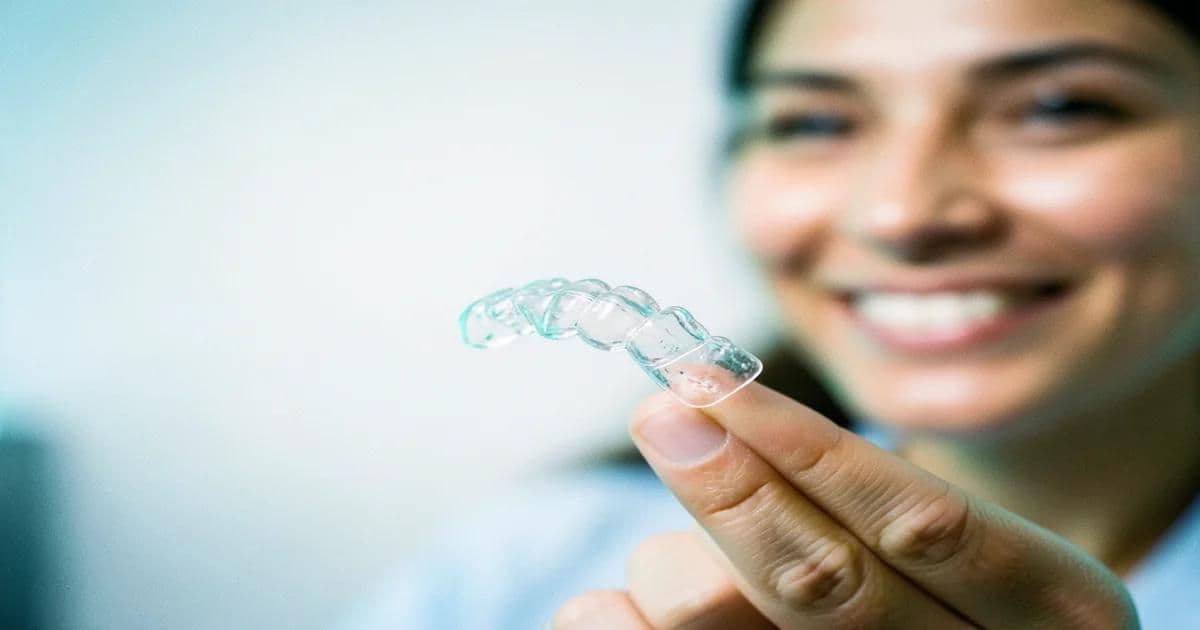
Invisalign uses a series of custom-made, nearly invisible plastic trays (aligners) to gradually shift your teeth into position. Each set of aligners is worn for about two weeks before moving to the next set in the sequence.
The process starts with a 3D scan of your teeth using an iTero scanner. Your orthodontist uses Invisalign's ClinCheck software to map out the entire treatment — you can actually see a digital preview of how your teeth will move at each stage before treatment begins.
Small tooth-coloured bumps called attachments are bonded to certain teeth to help the aligners grip and guide more complex movements. These are barely visible and are removed at the end of treatment. You'll also wear the aligners for 20-22 hours per day, removing them only for eating, drinking (anything other than water), and brushing.
Invisalign is not a DIY aligner kit. It's a prescription orthodontic system manufactured by Align Technology and delivered through certified providers. That distinction matters — especially when you're choosing a clinic abroad. Some patients also combine Invisalign with treatments like dental crowns once their teeth are properly aligned.
Invisalign works well for a specific range of orthodontic issues. If your case falls within these boundaries, Turkey is a genuinely viable option:
- Mild to moderate crowding — teeth overlapping or rotated slightly
- Spacing issues — gaps between teeth
- Mild overbite, underbite, or crossbite — where the misalignment is dental (teeth position) rather than skeletal (jaw position)
- Relapse after previous orthodontic treatment — teeth that have shifted after braces
You're a particularly strong candidate for Invisalign in Turkey if you're an adult with a stable dental situation (no active gum disease, no missing teeth that need implants first) and you can commit to wearing aligners 20-22 hours per day.
The broader context of dental tourism in Turkey applies here — the same quality standards, certifications, and logistics considerations are in play for orthodontics as for any other treatment.
No competitor in the search results says this clearly, so we will: Invisalign has real limitations.
You should consider traditional braces or other treatment instead if you have:
- Severe skeletal malocclusion — jaw misalignment that requires orthognathic (jaw) surgery, not just tooth movement
- Significant overbite or underbite — deep bite corrections that exceed what aligners can reliably achieve
- Severely rotated or tilted teeth — some tooth movements are mechanically difficult for aligners
- Teeth that need significant vertical movement — intrusion and extrusion are Invisalign's weakest areas
- Active periodontal disease — gum disease must be treated first before any orthodontic work
- Patients who won't wear aligners consistently — if 20-22 hours daily compliance isn't realistic for you, braces (which can't be removed) may be a better choice
The honest verdict: Invisalign handles about 90% of mild to moderate orthodontic cases effectively. For the remaining 10% — severe skeletal issues, complex bite corrections — braces or combined orthodontic-surgical treatment is the right call. A responsible clinic will tell you this upfront. If a clinic says Invisalign can fix everything, that's a red flag.
This is the section that no Invisalign Turkey page currently covers properly — and it's the single most important thing for a UK or EU patient to understand.
Invisalign is uniquely suited to dental tourism because most of the treatment happens at home. Unlike dental implants (which require surgical insertion and healing visits) or veneers (which need preparation and fitting appointments), Invisalign's model is: get scanned, receive your aligners, wear them at home, check in remotely. Here's exactly how it works:
-
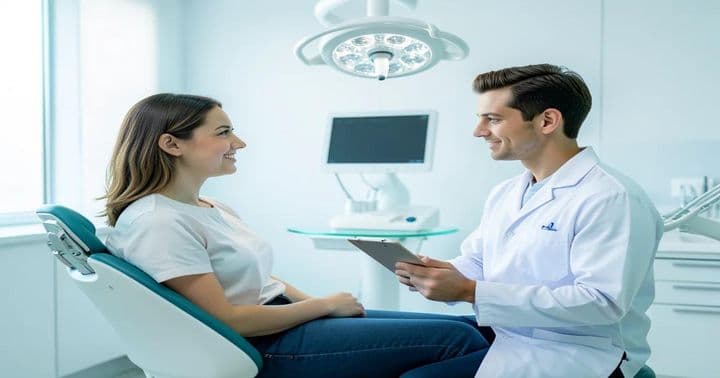
Visit Turkey for your initial appointment (2-3 days). Your orthodontist performs a full assessment, takes an iTero 3D scan of your teeth, and develops your ClinCheck treatment plan. You approve the digital plan, attachments are placed, and you receive your first batch of aligner trays.
-
Return home with your aligners. You'll typically receive enough trays for 3-6 months of treatment. You change to a new set every 1-2 weeks as directed.
-
Remote check-ins every 6-8 weeks. You send photos of your teeth (specific angles your clinic will show you) via WhatsApp or a dedicated app. Your orthodontist reviews progress and confirms you're tracking correctly.
-
Video consultations as needed. If something looks off — an aligner isn't seating properly, a tooth isn't tracking — your orthodontist can assess via video call and advise whether to continue, repeat a tray, or schedule an in-person visit.
-
Return to Turkey only if refinements are needed. For straightforward cases, you won't need a second trip. If your teeth need refinement aligners (additional trays to fine-tune the result), you may need one more visit for new scans. This applies to roughly 20-30% of cases.
Some clinics have a page from 2022 arguing that Invisalign in Turkey is impractical because "you need frequent orthodontist visits." That was already questionable then, and it's flatly wrong now. Remote monitoring protocols have matured significantly, and Invisalign's own Dental Monitoring app enables AI-assisted tracking that flags issues before they become problems.
The verdict: Invisalign is arguably the most dental-tourism-friendly treatment available. The combination of digital planning, removable appliances, and remote monitoring makes it possible to manage a full course of treatment with just one trip to Turkey.
If you're planning your first dental trip abroad, our preparation guide for dental treatment in Turkey covers everything from flights to what to bring.
Let's be specific, because vague answers like "1-2 visits" aren't helpful:
Trip 1 (required — 2-3 days in Turkey):
- Day 1: Comprehensive consultation, dental examination, iTero 3D scan
- Day 1-2: ClinCheck treatment plan review and approval (sometimes same day, sometimes next morning)
- Day 2-3: Attachment placement, first aligner fitting, instructions for home use
- You leave with your first batch of aligner trays
Trip 2 (optional — only if needed):
- Required for roughly 20-30% of patients who need refinement aligners
- New iTero scan to create refinement trays
- Typically 1-2 days
- Most commonly needed for complex cases (significant crowding, bite correction)
For comparison — how many trips do other treatments need?
| Treatment | Trips to Turkey | Why |
|---|
| Invisalign | 1 (occasionally 2) | Digital planning + remote monitoring |
| Dental implants | 2-3 | Surgery + healing + crown placement |
| Veneers | 1-2 | Preparation + fitting (sometimes same trip) |
| Dental crowns | 1-2 | Similar to veneers |
| Hollywood Smile | 1-2 | Depends on treatments combined |
The bottom line: most Invisalign patients make one trip to Turkey. That's fewer visits than almost any other major dental treatment.
Private Invisalign treatment in the UK — particularly in London and the South East — is one of the most expensive orthodontic options in Europe. Turkey offers the same Invisalign system (Align Technology supplies identically worldwide) at significantly lower cost.
Treatment in Turkey is substantially more affordable than UK private orthodontics. The difference is wide enough that even after covering return flights, a hotel for 2-3 nights, and airport transfers, most patients come out well ahead financially.
Why the difference? It's not about quality. Turkish clinics pay lower rent, lower staff costs, and lower overheads than their UK counterparts. The Turkish government also actively supports medical tourism through favourable regulation and healthcare investment. And the sheer number of clinics competing for international patients drives pricing down further. The same Invisalign product, the same ClinCheck software, the same aligner material — just delivered in a lower cost-of-operating environment.
No. The NHS does not cover Invisalign or any clear aligner treatment. NHS orthodontics is limited to functional cases (primarily children under 18 with severe malocclusion affecting eating or speech) using traditional fixed braces. Adult orthodontics is almost entirely private in the UK.
This means the real comparison for UK patients is Invisalign privately in the UK versus Invisalign in Turkey — and the cost difference is substantial enough to make Turkey the more practical option for most people.
The verdict: the cost difference is significant enough to cover flights, accommodation, and still leave you well ahead financially. Contact a clinic for a personalised quote based on your specific case.
Both options are available at Turkish clinics. Here's how they compare:
| Factor | Invisalign | Traditional Braces |
|---|
| Visibility | Nearly invisible | Visible (metal or ceramic) |
| Removability | Removable for eating and cleaning | Fixed for the duration of treatment |
| Comfort | Generally more comfortable, no wires | Can cause irritation from brackets and wires |
| Treatment time | 6-18 months | 12-24 months |
| Remote monitoring friendly | Yes — ideal for dental tourists | No — requires in-person wire adjustments |
| Suitable case complexity | Mild to moderate | All severity levels including severe |
| Oral hygiene during treatment | Easy — remove aligners to brush normally | Harder — must clean around brackets |
| Compliance requirement | High — must wear 20-22 hours daily | None — braces are fixed |
| Eating restrictions | None (remove aligners to eat) | Yes — no hard, sticky, or chewy foods |
The verdict: If you have a mild to moderate case and you value aesthetics, comfort, and the ability to manage treatment remotely from the UK, Invisalign is the clear winner for dental tourists. If you have a severe or complex case, traditional braces remain the more reliable option — and they'll require more trips to Turkey for adjustments.
For patients considering a full cosmetic transformation that includes alignment, a Hollywood Smile in Turkey often combines orthodontics with veneers or crowns for a complete result.
This is something no other Invisalign Turkey guide covers — and it matters.
Not every Turkish clinic offering "clear aligners" or even "Invisalign" is using the genuine Invisalign system from Align Technology. Some use alternative brands like ClearCorrect, SureSmile, or Spark. Others use generic, unlicensed aligner systems manufactured locally or imported from China.
Why does this matter?
- Invisalign uses ClinCheck — a proprietary 3D treatment planning platform with decades of case data. The algorithms predicting tooth movement are more refined than any competitor's.
- ClearCorrect (owned by Straumann) and SureSmile (owned by Dentsply Sirona) are legitimate alternatives with solid clinical backing. They're not Invisalign, but they're reputable.
- Generic/unlicensed systems vary wildly in quality. The aligner material, the treatment planning software, and the provider training may all be inferior. Some produce acceptable results for simple cases; others don't.
How to protect yourself:
- Ask explicitly: "Is this genuine Invisalign from Align Technology?"
- Request to see the clinic's Invisalign provider certification
- Verify on the Invisalign provider finder
- If a clinic is evasive about which system they use, that tells you something
The verdict: Genuine Invisalign or a reputable alternative (ClearCorrect, SureSmile) are both acceptable choices. Generic unlicensed systems are a gamble. Always verify before committing.
Transparency about what's included — and what's not — is where most clinic pages fall short. Here's what a comprehensive Invisalign package should cover:
Should be included:
- Initial consultation and orthodontic assessment
- iTero 3D scan and ClinCheck digital treatment plan
- All aligner trays for your prescribed treatment course
- Attachment placement and removal
- At least one round of refinement aligners (if needed)
- One set of retainers after treatment
- Remote monitoring check-ins throughout treatment
- Follow-up video consultations
Red flags — ask about these before booking:
- "Are refinement aligners included, or do they cost extra?" — Refinements are needed in 20-30% of cases. If they're not included, you could face unexpected costs mid-treatment.
- "What type of retainers are provided?" — Vivera retainers (Invisalign's own brand) are higher quality than generic options. Find out what you're getting.
- "Is remote monitoring included in the package?" — Some clinics charge separately for virtual check-ins. It should be part of the service.
- "What happens if I need additional aligner trays beyond the original plan?" — Understand the policy upfront.
- "Is the iTero scan included, or is there a separate scan fee?" — It should always be included.
When you're evaluating clinics, our guide on choosing the best dental clinic in Turkey covers the broader checklist — certifications, materials, reviews, and what to verify before booking any treatment.
The verdict: a package that excludes refinements or retainers isn't really a complete package. Get everything in writing before you commit.
This is a simple, actionable step that no other Invisalign Turkey guide mentions:
Go to the Invisalign provider finder, enter the clinic's location in Turkey, and check if they appear.
Invisalign categorises providers by tier based on the number of cases they've treated:
- Bronze — fewer cases, less experience
- Silver — moderate experience
- Gold — significant experience
- Platinum — high volume, extensive experience
- Diamond / Diamond+ — highest tier, thousands of cases treated
A higher tier doesn't guarantee a better outcome for your specific case, but it indicates that the orthodontist has significant experience with the Invisalign system. Gold tier or above is a reasonable benchmark for international patients seeking confidence in their provider.
If a clinic claims to offer Invisalign but doesn't appear on the provider finder, they may be using a generic system marketed as "clear aligners" — not genuine Invisalign.
Finishing your last aligner tray isn't the end of the process. Retention — keeping your teeth in their new position — is critical, and it's the part that international patients often worry about most.
Retainer options after Invisalign:
- Vivera retainers — Invisalign's own retainer brand, made from the same SmartTrack material as the aligners. More durable and better-fitting than generic alternatives. Typically provided in sets of 3-4.
- Standard removable retainers — generic clear retainers, functional but may not last as long as Vivera.
- Fixed retainers (bonded wire) — a thin wire bonded behind your front teeth. Permanent, requires no compliance, but needs occasional maintenance. Can be placed by your UK dentist if preferred.
The retention schedule:
- First 3-6 months: wear retainers 22 hours/day (same as aligners)
- After 6 months: transition to nights only
- Long term: continue wearing retainers at night indefinitely (teeth naturally shift throughout life)
For international patients: your Turkish clinic should continue remote check-ins for 3-6 months after treatment ends. If you need retainer adjustments or replacements, a UK orthodontist or dentist can handle this locally. Some patients also consider dental veneers after Invisalign to perfect the cosmetic result once teeth are properly aligned.
The verdict: retention is non-negotiable. Make sure your package includes quality retainers and that you commit to wearing them. The best Invisalign result in the world will relapse without proper retention.
At BestDent, we're a certified Invisalign provider — you can verify this through the official Invisalign provider finder. Our orthodontist team uses the iTero scanner and ClinCheck 3D planning for every case, so you see exactly how your teeth will move before treatment begins.
For UK and EU patients, we've built a dedicated remote monitoring protocol:
- Pre-arrival virtual consultation — we assess your case via photos and video call before you fly, so you know whether Invisalign is suitable and roughly how long treatment will take
- Streamlined Turkey visit — consultation, scan, ClinCheck approval, and first fitting typically completed in 2 days
- WhatsApp-based remote monitoring — photo check-ins every 6-8 weeks with direct access to your orthodontist
- Video consultations as needed — if anything looks off, we do a video assessment within 48 hours
- UK dentist coordination — we provide detailed treatment records that your UK dentist can use for local follow-up or retainer maintenance
Our Invisalign packages include everything: consultation, iTero scan, all aligner trays, attachments, refinement aligners, Vivera retainers, and ongoing remote monitoring. No hidden fees, no surprise charges mid-treatment.
For patients who may also need dental implants for missing teeth before starting Invisalign, we coordinate both treatments into an efficient plan.
Ready to find out if Invisalign in Turkey is right for you? Contact BestDent for a free virtual consultation — we'll assess your case and give you an honest recommendation before you commit to anything.