Full mouth dental implants in Turkey — All-on-4, All-on-6, and All-on-8 protocols, a two-trip treatment process, Straumann and Nobel Biocare implant brands, JCI-certified clinic standards, and aftercare coordination for UK and EU patients.
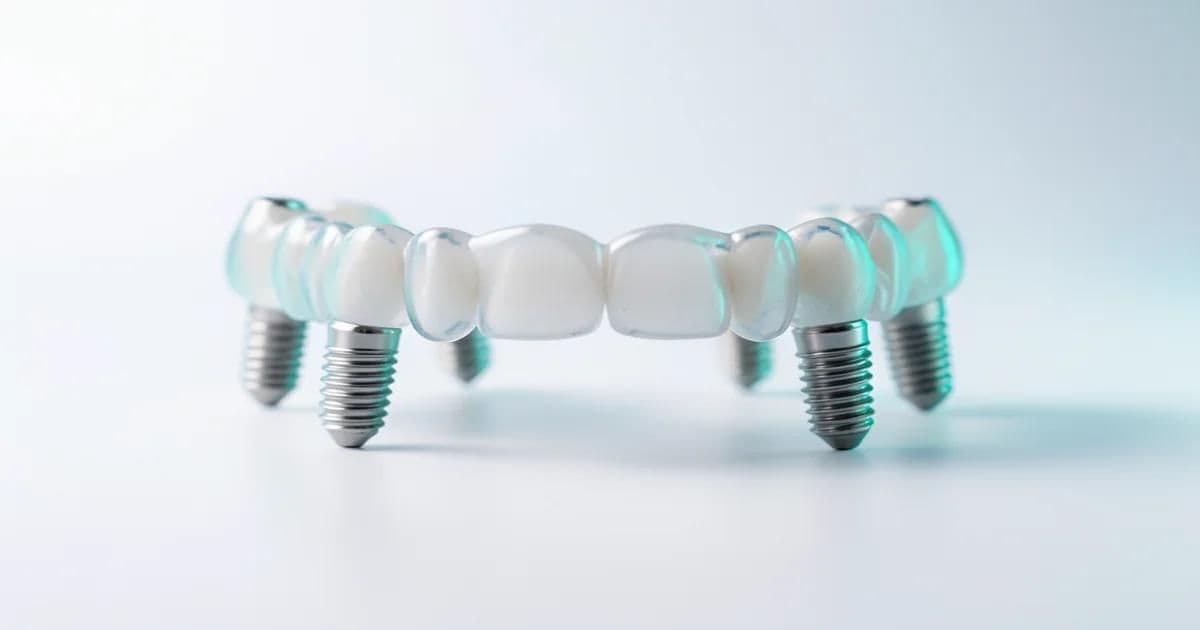
Full mouth dental implants replace an entire upper or lower arch with a permanent bridge fixed onto four to eight titanium implants. In Turkey, this treatment is available through health tourism at costs well below UK and Western European levels, completed in two trips, and using premium brands such as Straumann or Nobel Biocare. This guide will help you understand which protocol suits your situation, what the real timeline looks like, the likelihood of complications, and how to choose a clinic you can trust.
| What | Summary |
|---|
| Procedure | Full mouth dental implants (All-on-4, All-on-6, All-on-8) |
| Protocol selection | Determined by jawbone density, bite load, and aesthetic priorities |
| Implant brands | Straumann (Switzerland), Nobel Biocare (Sweden), Astra Tech — premium |
| Total process | Approximately 4 months (2 visits + 3–4 months osseointegration) |
| First visit | 3–5 days (consultation, surgery, temporary prosthesis) |
| Second visit | 5–7 days (final zirconia bridge) |
| Success rate | 98%+ (10 years, with premium implants) |
| Savings | Well below UK/EU through health tourism |
| Not suitable for | Severe osteoporosis (bisphosphonate use), uncontrolled diabetes, active radiotherapy |
| Aftercare | Coordinated follow-up with a UK dental network |
Full mouth dental implants are a permanent restoration that replaces all teeth in the upper or lower jaw with a fixed full-arch bridge supported by four to eight titanium implants. There are three main protocols: All-on-4, All-on-6, and All-on-8. The treatment requires two clinical visits and includes a 3–4 month osseointegration waiting period.
The difference from dentures and single implants is this: a denture is a removable prosthesis — taken out after every meal, never fully stable in the mouth. A single implant replaces just one tooth. Full mouth implants hold all the teeth across an entire arch in a fixed bridge — it does not slip when you speak, it does not loosen when you eat, and aesthetically it is indistinguishable from natural teeth (ADA — Implants).
Structurally, the restoration has three components: titanium implants placed in the jawbone (the root substitute), abutments connected to the implants (the connectors), and the zirconia or high-quality acrylic bridge on top. Zirconia is the gold standard for aesthetics and durability; acrylic is more economical but may need replacing after 8–10 years.
Every patient is different. Some have lost all teeth only in the upper jaw (maxilla), while the lower jaw remains healthy — in that case, a single-arch implant is sufficient. Where there is significant tooth loss in both jaws, a full mouth (dual-arch) treatment is carried out. This decision cannot be made without a CT scan; any approach that defaults to "let's do the whole mouth" without assessment is ethically questionable.
There are two types of implant-supported prostheses. A fixed bridge is permanent — secured to the implants with screws, removable only by a dentist. An implant-supported overdenture clips on and off; it is generally chosen for the lower jaw or in patients with budget constraints. We recommend the fixed bridge: it feels more natural, delivers higher bite force, and requires less revision over the long term.
If you are missing just one tooth, our dental implants in Turkey guide is a better starting point.
Suitable candidates for full mouth implants are adults with adequate jawbone density, no uncontrolled systemic disease, treated active periodontal infection, and the ability to maintain oral hygiene. Controlled diabetes and mild osteoporosis do not automatically rule you out, but heavy smoking, bisphosphonate therapy, and recent radiotherapy are serious risk factors.
The clinical criteria are straightforward. Healthy gum tissue, sufficient bone volume (or bone that can be gained through grafting), well-controlled diabetes (HbA1c < 8), absence of active infection, and a commitment to daily oral hygiene — if these five factors are in place, the door is open.
Age alone is not a limiting factor. We have placed implants in healthy 80-year-old patients at our clinic; systemic health matters far more than chronological age. A 35-year-old with uncontrolled diabetes carries a higher risk than a healthy 75-year-old.
Some conditions do not make implants impossible but significantly increase the risk of failure:
- Bisphosphonate therapy: Particularly in osteoporosis patients taking IV bisphosphonates, there is a risk of medication-related osteonecrosis of the jaw (MRONJ), and the risk can persist for years even after discontinuing the drug (NIH — MRONJ research).
- Heavy smoking: Smoking more than 10 cigarettes per day increases the risk of failure by three to four times. Stopping at least two weeks before and three months after surgery is mandatory.
- Uncontrolled diabetes: With HbA1c > 8, osseointegration tends to fail. The condition must be brought under control first.
- Head and neck radiotherapy within the past six months: A waiting period is required due to the risk of osteoradionecrosis.
Answer the following questions honestly. Eight or more "Yes" answers mean you are a strong candidate:
| # | Question | Yes/No |
|---|
| 1 | Are you over 18 years old? | |
| 2 | Has your jawbone finished developing (adult stage)? | |
| 3 | Do you have no active gum disease (periodontitis)? | |
| 4 | If you have diabetes, is it well controlled (HbA1c < 8)? | |
| 5 | Are you not taking bisphosphonates or similar bone medications? | |
| 6 | Have you not had head or neck radiotherapy in the past six months? | |
| 7 | Do you smoke fewer than 10 cigarettes per day (or have you quit)? | |
| 8 | Are you not currently receiving active cancer treatment? | |
| 9 | Do you brush twice a day and floss regularly? | |
| 10 | Are you prepared to attend regular dental check-ups for at least one year? | |
If you answered "No" to some questions, do not lose heart — insufficient bone can be addressed with grafting, active gum infection can be treated, and uncontrolled diabetes can be managed with an endocrinologist. Our dental bone graft treatment guide explains how most cases of bone deficiency can be made treatable. What matters is an honest assessment and a realistic plan.
All-on-4 is a full-arch bridge fixed onto four strategically angled implants in the upper or lower jaw; it is suitable for most patients with adequate bone. All-on-6 uses six implants for better load distribution and is preferred where bone loss is moderate. All-on-8 offers maximum stability and is recommended for patients with bruxism or heavy bite load.
The All-on-4 protocol was developed in 1998 by Portuguese surgeon Paulo Malò and commercialised by Nobel Biocare. The two rear implants are placed at an angle of 30–45 degrees, avoiding the sinus cavity and the mandibular nerve — which eliminates the need for bone grafting in most patients (Nobel Biocare — All-on-4). In an immediate-loading protocol, a temporary bridge can be fitted on the day of surgery. It is the ideal starting point for patients with sufficient bone, those who want results quickly, and those who are cost-sensitive.
All-on-6 distributes the load across a wider area by placing six straight implants. It is preferred in patients with moderate bone loss and those who prioritise long-term durability. A 2015 meta-analysis by Moraschini and colleagues showed that a higher implant count increases long-term arch stability (Moraschini et al. 2015). It is particularly recommended for the upper jaw, because maxillary bone density is lower than in the mandible.
All-on-8 provides maximum arch support with eight implants. It is considered in cases of severe bruxism (night-time tooth grinding), high bite force, long arch length, or where the patient wants to eliminate any possible risk. It is not necessary for every patient; clinics that routinely propose it under the banner of "maximum stability" are not acting in patients' best interests. To be direct: most patients do not need All-on-8.
The decision tree is straightforward:
- Adequate bone + want fast results + cost-sensitive → All-on-4
- Moderate bone loss + long-term durability is a priority → All-on-6
- Severe bruxism + upper jaw + seeking maximum stability → All-on-8
| Criterion | All-on-4 | All-on-6 | All-on-8 | Single Implants |
|---|
| Number of implants | 4 | 6 | 8 | One per missing tooth |
| Suitable bone condition | Adequate–good | Moderate–good | Adequate–good | Regionally adequate per tooth |
| Average healing time | 3–4 months | 3–4 months | 3–4 months | 3–4 months |
| Bite load capacity | Good | Very good | Excellent | Close to natural teeth |
| 10-year survival rate | 94–97% | 96–98% | 97–98% | 97–98% |
| Bone graft required? | Usually not | Sometimes | Sometimes | Case-dependent |
| When preferred | Most patients, quick turnaround | Moderate bone, durability focus | Bruxism, maximum stability | A few missing teeth |
For an in-depth look at protocol selection, see our All-on-4 dental implants Turkey guide and All-on-6 dental implants Turkey.
Full mouth dental implants in Turkey are completed in two visits. The first visit lasts 3–5 days: consultation, 3D CT scan, implant surgery, and temporary prosthesis. You then return home for 3–4 months of osseointegration. The second visit lasts 5–7 days: impressions, fitting, and final placement of the zirconia bridge.
Day 1 — Assessment and planning. A 3D cone-beam computed tomography (CBCT) scan is taken. The surgeon assesses bone density and digitally plans the implant positions. A treatment plan and written consent form are provided.
Day 2 — Implant surgery. A 2–3 hour procedure under local anaesthesia. Intravenous sedation is available for patients who prefer it. If bone condition permits, a temporary acrylic bridge is fitted in the same session (immediate loading).
Day 3 — Rest. Swelling and mild discomfort are normal. Cold compresses, prescribed painkillers, and soft foods are recommended. Remote consultation support is provided by the clinic.
Day 4 — Check-up. Sutures are inspected and the temporary prosthesis adjusted. Oral hygiene and aftercare training is given before discharge.
Day 5 — Flight clearance. Once the check-up is satisfactory, clearance is given to return to the UK. Emergency contact details and prescribed antibiotics are provided.
Osseointegration takes place during this period. You continue with your normal daily life — you speak with the temporary prosthesis in place and eat soft-to-medium consistency food. Heavy biting, hard foods, and high-impact sport are not recommended.
Day 1 — Review and digital scan. Osseointegration of the implants is confirmed. A digital intraoral scan is taken for the final bridge.
Days 2–4 — Laboratory production. The zirconia bridge is milled using CAD/CAM technology. During this time the patient can explore the city and attend individual fittings.
Day 5 — Final bridge placement. The bridge is secured to the implants with screws. Bite alignment and aesthetics are checked.
Days 6–7 — Final adjustments. Occlusion (bite) fine-tuning is carried out if needed, and oral hygiene training is repeated. Annual follow-up scheduling is arranged.
| Visit | Duration | What happens | What it means for you |
|---|
| First visit | 3–5 days | CBCT, surgery, temporary bridge | Fly home with visible teeth |
| Home (osseointegration) | 3–4 months | Bone–implant fusion | Normal life, soft-to-medium food |
| Second visit | 5–7 days | Digital impression, zirconia bridge | Permanent fixed teeth, final aesthetics |
For a full checklist of what to prepare before your first trip, see our preparing for dental treatment in Turkey guide.
Osseointegration is the biological process by which a titanium implant fuses with the jawbone. Within one to two weeks of placement, bone cells (osteoblasts) begin attaching to the implant surface, and by weeks 12–16 a dense bone–implant interface has formed. The final bridge cannot be placed until this process is complete.
The term was coined in the 1960s by Swedish orthopaedic researcher Per-Ingvar Brånemark: a structural and functional direct connection between living bone and titanium. This discovery is the foundation of modern implant dentistry.
Why 3–4 months? The bone remodelling cycle takes approximately 12 weeks. Modern implant surface technologies shorten this process somewhat: Straumann's SLActive surface and Nobel Biocare's TiUnite surface accelerate osteoblast attachment compared with conventionally machined surfaces. A 10-year follow-up study by Buser and colleagues demonstrated that SLA/SLActive surfaces achieve high success rates even with early loading protocols.
What you should NOT do during these 3–4 months: chew hard food at the surgical site, lift heavy weights or do high-impact exercise (first two weeks), press the area with your tongue or fingers, or smoke.
The 10-year success rate with modern premium implants stands at 98%+ (Moraschini et al. 2015). The failure probability is around 1–3% and the causes are: insufficient primary stability, early infection, osseointegration failure, or peri-implantitis. Failure almost always manifests within the first 3–4 months — this is precisely why the waiting period must not be skipped. A failed implant is removed, the bone heals (2–3 months), and a new implant is placed.
Premium implant brands (Straumann, Nobel Biocare, Astra Tech) deliver 95%+ survival rates over ten years and have global parts compatibility. Low-cost Korean or Chinese brands may function adequately in the short term, but long-term clinical evidence and international compatibility are limited. The difference is not simply price — it is 20 years of peace of mind.
An implant body is a titanium screw — they all look similar from the outside. Three things make the difference: surface technology (affects osseointegration speed), abutment compatibility (when parts need replacing years later), and the volume of long-term clinical data behind the product.
Straumann (Switzerland). The industry leader, with SLActive hydrophilic surface technology. Global ten-year survival rate of 98%+. Component compatibility is worldwide — any Straumann dentist in the UK or Germany can carry out the necessary repair 20 years from now (Straumann Scientific Evidence).
Nobel Biocare (Sweden). The originator of the All-on-4 protocol. The TiUnite surface and NobelActive implant geometry deliver strong primary stability, especially in soft bone. The Malò protocol carries more than 20 years of clinical data.
Astra Tech / Dentsply Sirona (Sweden/USA). The OsseoSpeed surface is particularly strong in aesthetic zones (front teeth). The conical connection geometry minimises marginal bone loss.
Korean brands (Osstem, Dentium, MegaGen). Mid-range quality with 5–10 years of clinical data available. Widely used in Asian markets. Acceptable if there is a significant budget constraint, but they are not premium.
| Brand | Origin | Surface Technology | 10-Year Survival | Lifetime Warranty | Premium? |
|---|
| Straumann | Switzerland | SLActive | 98%+ | Yes | Yes |
| Nobel Biocare | Sweden | TiUnite | 96–98% | Yes | Yes |
| Astra Tech | Sweden/USA | OsseoSpeed | 96%+ | Yes | Yes |
| Osstem | South Korea | CA/SA | 93–95% | Limited | Mid-range |
Which brand should you choose? Ask your clinic directly: "Which brand of implant do you use, can you provide a batch-number certificate, and is the lifetime implant warranty in writing?" If the answer is vague, that is a warning sign.
Patients with insufficient jawbone density may require a bone graft or sinus lift. Where the sinus cavity blocks implant placement in the upper rear jaw, a sinus lift is performed. Minor grafts can be carried out in the same session as implant surgery; major reconstructions require an additional 4–6 months of healing time and will extend the overall treatment period.
Bone loss typically occurs for three reasons: prolonged edentulism (bone resorbs when unused), chronic periodontal disease, or incomplete healing after extraction or trauma. The CBCT scan measures bone volume down to the millimetre. Where it is insufficient, two paths are available.
Minor graft (2–4 mm deficiency) is generally carried out in the same session as implant surgery. Synthetic bone material or the patient's own bone chips (autograft) are placed in the defect, and healing progresses alongside the implant. This does not extend the overall timeline.
Major graft (5+ mm deficiency, block graft, or sinus lift) is performed in a separate session. Four to six months of healing is then required before implants can be placed. The total treatment duration becomes 8–10 months.
A sinus lift is performed when the maxillary sinus in the rear of the upper jaw would otherwise obstruct the implant. The sinus membrane is gently elevated and bone material is placed in the space beneath. The procedure takes 30–45 minutes and is very safe with modern techniques.
For the detailed procedure of bone grafting, see our dental bone graft treatment guide.
With modern full mouth dental implants, the 10-year failure rate is 1–3%, most commonly caused by peri-implantitis, insufficient primary stability, or osseointegration failure. Early detection is critical: regular six-monthly check-ups, correct oral hygiene, and stopping smoking reduce failure risk significantly. Revision is possible, but it is complex.
Most of the industry avoids discussing this. We do not, because honesty is part of the treatment.
Early failure (first 3–4 months) occurs in approximately 1–2% of cases. Causes: insufficient primary stability (the implant did not seat fully), infection at the surgical site, or patient factors (heavy smoking, uncontrolled diabetes).
Late failure (years later) is primarily caused by peri-implantitis — infection of the gum and bone around the implant. Symptoms include redness, bleeding, pocket formation around the implant, and in advanced cases bone loss and implant loosening. This is a condition that is largely preventable.
Risk factors are clear:
- Smoking — increases risk three to four times.
- Uncontrolled diabetes — impairs healing and immune response.
- Poor oral hygiene — bacterial plaque accumulation.
- Bruxism (tooth grinding) — excessive mechanical load; controlled with a night guard (splint).
- Irregular check-ups — missing early warning signs.
Protocol for a failed implant: the implant is removed atraumatically, the site heals for 2–3 months, and a new implant is placed. The success rate of replacement is high because the original cause of failure has by then been addressed.
What do you do if you experience a complication after returning to the UK? This is a question that virtually no competitor answers — we do: BestDent's UK-coordinated dental network becomes involved, a local examination is arranged, and a return visit to Turkey is planned if revision is needed. We will return to this point shortly.
For a broader perspective on general safety standards in Turkey, see our article Is dental work safe in Turkey?
Full mouth dental implant treatment in Turkey offers prices well below UK and Western European levels through health tourism. This difference stems not from lower quality but from lower operating costs, a state-supported dental education infrastructure, and intense clinical competition. The implant brands used — Straumann, Nobel Biocare — are identical to those used in London clinics.
A fair question: "How can it be so different?" The answer comes down to four points.
Operating costs. In Turkey, rent, staff salaries, energy, and clinical running costs are a fraction of those in the UK or EU. The same Straumann implant, the same titanium screw, the same zirconia block — but the operational infrastructure surrounding them is far more economical.
Dental education infrastructure. Turkey has more than 15 university dental schools and graduates thousands of new dentists every year. This intensifies clinical competition and improves access to practitioners.
Global standards, local pricing. JCI (Joint Commission International) accreditation is US-based and applies the same standards worldwide. ISO 9001 quality management is global. The implant brands used are global too — the route to lower prices is not through compromising quality.
What should a package include? A genuine full mouth implant package should cover: all consultations (virtual and in-person), CBCT scan, implant surgery, premium brand implants, temporary bridge, final zirconia bridge, airport transfer, interpreter service, hotel coordination, medications, and aftercare. Avoid packages where "hidden costs" materialise later as separate items.
Why do prices vary between clinics? Because the implant brand differs, graft requirements vary by case, clinic certifications are at different levels, and included services are not the same. That is why no accurate "average price" can be given — every case is individual.
For a personalised quote, get in touch with us; we will review your CT scan and create a plan tailored to you. For the logistics of health tourism, our dental tourism Turkey guide provides comprehensive information.
BestDent Ataşehir is a JCI-certified Turkish dental clinic that has been providing full mouth implant treatment to patients from the UK and EU for over 10 years. We want to give you a genuine answer to the question "how do you work?" — not in sales language, but with transparency.
JCI + ISO 9001 certification. JCI (Joint Commission International) is the gold standard in international healthcare — US-based, awarded after a 600-plus-criteria audit. Most competitor clinics hold AACI or generic ISO; JCI is held by only a small number of Turkish dental clinics. What does it mean for you? Standardised sterilisation, traceable patient records, and an internationally recognised complaints mechanism.
Straumann and Nobel Biocare only. We do not use budget brands. This is a principled decision: a patient living in the UK 20 years from now should be able to walk into any clinic and have Straumann components replaced without difficulty. This standardisation is what stands behind our lifetime implant guarantee.
UK dental coordination. This is our genuine point of difference. Once you return home, if you need a routine check or urgent care, one of our UK partner dentists will see you and report back to us. Almost no other clinic in Turkey has this kind of infrastructure in place.
Five-year written warranty. We provide a five-year written warranty covering the implant body and the zirconia bridge. If a problem arises, we include your return flight to Turkey.
Conservative approach. We are comfortable saying "you do not need All-on-8." Competitors default to maximum; we do what is necessary. We do not extract teeth that do not need extracting, and we do not recommend All-on-8 when All-on-6 will serve you perfectly well. This is not only an ethical stance — it is an investment in long-term trust.
All-inclusive package. Airport transfer, hotel, interpreter, pre-assessment, surgery, temporary bridge, final zirconia bridge, medications, aftercare — all at a single price. No surprise invoices during your visit.
Before choosing any clinic, I would encourage you to read our questions to ask when choosing a dental clinic in Turkey guide — hold us to the same standard. Expect honest answers. To find out whether a treatment plan is right for you, you can book a free virtual consultation — no pressure, just an assessment.
After returning home following your first visit, healing continues during the 3–4 month osseointegration period. BestDent has established a network of coordinated dentists across the UK — if you need an urgent review or a routine check-up, you can be seen locally. The first two weeks are critical: soft food, regular salt-water rinses, and a smoke-free recovery.
First 24–48 hours (in Turkey): mild swelling and discomfort are normal. Cold compresses, prescribed painkillers, and antibiotics should be taken as directed. Smoking, alcohol, and hot food should be strictly avoided.
After your flight, first week: soft food (soup, yoghurt, boiled vegetables, fish). Drink plenty of water during the flight and stand up periodically to keep circulation in your legs. Sutures remain in place for the first 5–7 days.
Week 2 through months 3–4: you return to your normal routine. You can speak freely with the temporary bridge and eat soft-to-medium food. Hard foods (nuts, crusty bread) should still be avoided. Brush twice daily and use mouthwash — these are non-negotiable.
UK dental coordination activates in two scenarios. First, a routine check-up at 6–8 weeks — our local partner sees you and sends us a report. Second, any concern — increased swelling, loosened sutures, worsening pain. Our WhatsApp teleconsultation is active around the clock; most worries are resolved within a ten-minute video call.
For the detailed care protocol, see our post-implant aftercare guide.
Safe clinic selection requires verification of at least four criteria: international certification (JCI or ISO 9001), use of premium implant brands (Straumann/Nobel Biocare), a written long-term warranty, and a transparent pricing policy. You should also look for genuine patient reviews on independent platforms (Trustpilot, Google Reviews — not the clinic's own website) and a named dental team.
Red flags — step away if you see any of the following signals:
- Packages offering "one price for All-on-4" — packages that lack detail reveal what has been cut out when you ask questions.
- "Premium implant" claims without naming a brand — "we use premium too" is not enough; which brand, which model?
- Warranty not provided in writing — a verbal warranty is not a warranty.
- Content authored by an anonymous "admin" — no named dentist means no accountability.
- Reviews only on the clinic's own website — if there is no independent platform verification (Trustpilot, Google Reviews), be sceptical.
- Promises of an "ultra-fast" process — clinics claiming "complete in three days" are skipping osseointegration; this means failure two years down the line.
- Competing on price alone — winning on the lowest price is not a competitive strategy; it is an indicator of corners being cut.
For a detailed comparison, see our how to find the best dental clinic in Turkey guide.
Full mouth dental implants are a major decision — the right approach begins with an assessment tailored specifically to you. At BestDent Ataşehir, a JCI-certified team using only Straumann and Nobel Biocare implants offers a free virtual consultation with no pressure whatsoever. Send us your CT scan, receive our protocol recommendation, and get your questions answered.
This article was prepared by the BestDent Ataşehir clinical team and reviewed by the lead responsible clinician. BestDent is a JCI-certified Turkish dental clinic that has been serving patients from the UK, Germany, the Netherlands, and France for over 10 years.
<!-- Schema hint for sanity-publisher: Article + MedicalWebPage + FAQPage + MedicalProcedure + BreadcrumbList. MedicalProcedure: procedureType=Surgical, bodyLocation=mouth, howPerformed=two-visit protocol. FAQPage: 10 Q&A pairs above. NO HowTo schema (medical procedure misuse risk). -->