Most Invisalign cases from London need one Istanbul trip — but not every smile should fly. A clinician's honest 2026 candidacy guide covering the duration-vs-stay tension, who should stay in London, trips, and GDC regulatory context for UK patients.
Clinically reviewed by Dr. Taşkın Gürbüz, DDS (Istanbul University), 15+ years treating international patients.
Can you really treat a 12-month smile 1,500 miles from your dentist? For most London patients, yes. Invisalign from London to Istanbul runs on one initial 2–3 day visit: an iTero scan, a ClinCheck plan, attachments, and your first trays. After that, you fly home from IST, wear the aligners in London, and your clinician checks progress through photos. Treatment still takes 6–18 months. You just don't spend it in Istanbul. The full Invisalign in Turkey guide covers the procedure mechanics; this page is about whether you, in London, should fly at all.
The short answer:
- Most Invisalign cases need one 2–3 day Istanbul trip; treatment is then worn and monitored from home in London.
- Around 20–30% of cases need a second short refinement trip later.
- Skip flying if you have a complex bite, poor compliance, or can't return for refinements. See a UK specialist instead.
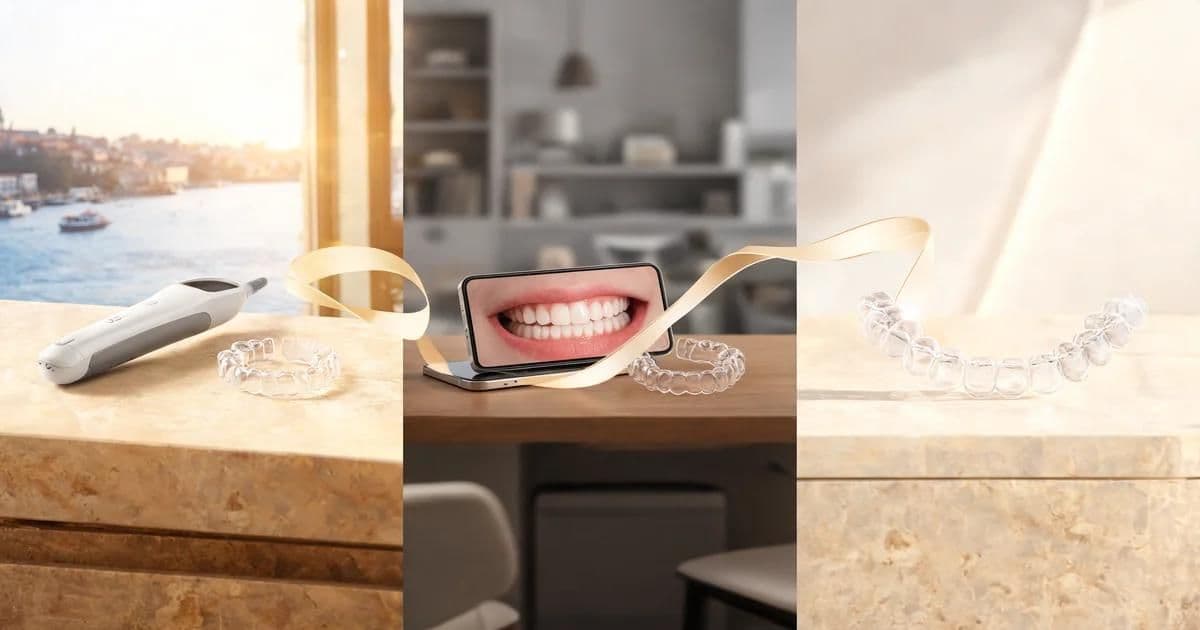
You start it once, then carry it out at home. One initial Istanbul trip captures an iTero 3D scan, builds your ClinCheck treatment plan, bonds the attachments, and hands you your first set of trays. You then progress through the aligners in London, swapping trays on schedule, while your clinician reviews remote photo check-ins and flags anything that stops tracking.
That remote-review loop is the part people worry about most. The short version: you photograph your teeth on a set schedule, your clinician compares them against the ClinCheck plan, and if a tooth lags they adjust or trigger a refinement set. How that monitoring works step by step is covered in the Invisalign in Turkey guide, so there's no need to repeat it here.
What matters for a London patient is the framing: Invisalign is the one dental-tourism treatment where most of the work happens at home, not in the chair. Implants need surgery on site. A Hollywood smile needs prep and fitting on site. Aligners need a plan on site and discipline everywhere else. That's why a year-long treatment is genuinely workable from 1,500 miles away, where same-day veneers are not.
Not every smile should get on a plane. The cleanest candidates are mild-to-moderate crowding or spacing, good compliance (22 hours a day), healthy gums, and a realistic ability to return for a refinement. Skeletal bite problems and low-discipline patients are the ones who get hurt by treating ortho abroad. For them, the honest answer is stay in London.
Here's what we see in practice. Of the London adult cases we scan with iTero, the ones that finish smoothest are mild-to-moderate crowding with good compliance. The cases we send back to a UK specialist orthodontist are skeletal bite problems (open bite, significant deep bite, crossbite), anything likely to need mid-course re-planning, and anyone who realistically can't return for a refinement trip. Around 20–30% of Invisalign cases need a refinement set anyway, so "can you come back if needed?" is a real candidacy question, not a footnote.
Good candidate (flying is reasonable):
- Mild-to-moderate crowding or spacing
- Healthy gums, no untreated periodontal disease
- Good compliance (will wear trays 22 hours a day)
- Can return to Istanbul for a refinement if needed
Stay in London (see a UK specialist orthodontist):
- Severe crowding or skeletal bite issues (open bite, deep bite, crossbite)
- Cases needing heavy IPR staging or likely mid-course re-planning
- Poor compliance, or a history of not finishing aligner treatment
- Can't realistically return for a refinement trip
- Unmanaged gum disease that needs treating first
The honest answer for a complex bite is: stay in London. Telling you that is the whole point of this page. For a wider view of how UK and Turkey compare beyond Invisalign, the same candidacy-first logic applies.
| Factor | Treat in London | Start in Istanbul |
|---|
| Trips needed | Multiple local visits | One initial trip (+ optional refinement) |
| Where treatment happens | London chairside + home | Plan in Istanbul, worn at home in London |
| Monitoring | In-person reviews | Remote photo check-ins |
| Regulator | GDC-registered clinician | Turkish Ministry of Health + clinician oversight |
| Best-fit candidate | Any complexity, incl. skeletal cases | Mild-to-moderate, good compliance |
| Cost level | Full UK private rates | A fraction of UK private rates |
One. Most London Invisalign cases need a single 2–3 day initial trip to start treatment, with an optional second refinement trip in roughly 20–30% of cases. That's fewer trips than implants, which need two intensive surgical blocks. Direct flights run from LHR, LGW, and STN into IST or SAW, so a long weekend covers the initial visit.
| Trip | Purpose | Length | Where |
|---|
| Trip 1 (required) | iTero scan, ClinCheck, attachments, first trays | 2–3 days | Istanbul |
| Wear phase | Progress through trays, remote check-ins | 6–18 months | Home in London |
| Trip 2 (optional, ~20–30%) | Refinement scan + refinement trays | 1–2 days | Istanbul |
You can plan the initial trip around a weekend and most of the treatment runs invisibly at home. If you're considering combining alignment with cosmetic work, you can combine with composite bonding or a smile design, but bonding is normally done after alignment finishes, not before.
In the UK, adult orthodontics is private and GDC-regulated: aligner treatment must be planned and supervised by a clinician registered with the General Dental Council. The real risk in this market isn't Istanbul. It's "mail-order" or "Invisalign-in-a-box" aligners with no in-person clinician behind them. A reputable Istanbul clinic should meet the same bar the GDC sets at home: a named, qualified clinician who scans you, plans your case, and stays accountable for it.
The NHS doesn't fund adult cosmetic alignment, which is exactly why UK adults go private or abroad. NHS orthodontics for adults is limited to clear clinical need, not cosmetic straightening, so private Invisalign is the default route regardless of where you have it done.
The risk isn't Istanbul. The risk is any aligner plan with no registered clinician behind it. Before you fly, verify a clinic's clinician oversight: ask who plans your ClinCheck, who you contact mid-treatment, and how refinements are handled. Those answers separate a clinician-led service from a sales funnel.
You're not stranded. If a tray cracks or you lose one, the standard protocol is to re-wear your previous aligner to hold position, photograph the issue, and send it to your clinician for a remote review. They decide whether to skip ahead, reorder, or wait. A local UK emergency dentist is only genuinely needed for pain, a broken attachment, or a gum problem, not a cracked tray.
This is the question no Turkey-or-London competitor answers cleanly, and it's the one that keeps people up at night. The honest reality: most aligner hiccups are managed by photo and message, not by flying back. After treatment finishes you're fitted for retainers, typically Vivera retainers from Align Technology, which you can usually receive and replace without a return flight.
Our London Invisalign cases are clinician-led from the first scan. Dr. Taşkın Gürbüz reviews every ClinCheck plan before trays are made, we schedule remote photo check-ins on a fixed cadence, and our refinement policy is set out before you fly, not improvised later. English-speaking coordinators handle your timeline, and we help arrange UK follow-up so a local dentist can support you between trays.
If you're unsure whether your case is suitable, that's the right time to ask. Book a virtual consultation or chat with us on WhatsApp and we'll tell you honestly whether to fly or stay in London, before you book anything.
Dr. Taşkın Gürbüz (DDS, Istanbul University) is BestDent's Lead Dentist and Medical Advisor, with an Advanced Implantology Certification and 15+ years of clinical experience treating international patients. He reviews every London Invisalign case plan personally and authored the cluster's Invisalign in Turkey guide.