Everything you need to know about All-on-6 dental implant treatment: who is a candidate, how the process works, what the risks are, and what recovery looks like. An independent patient guide backed by clinical data.
All-on-6 dental implants are one of the most reliable fixed prosthesis solutions for patients who have lost all or most of their teeth. A full-arch bridge fixed onto six titanium implants means you're done with the discomfort of removable dentures for good.
This guide draws on experience from hundreds of All-on-6 cases managed at our clinic. It covers the topics most patient guides skip over entirely — risks, material selection, and how to verify clinic quality — honestly and without softening anything.
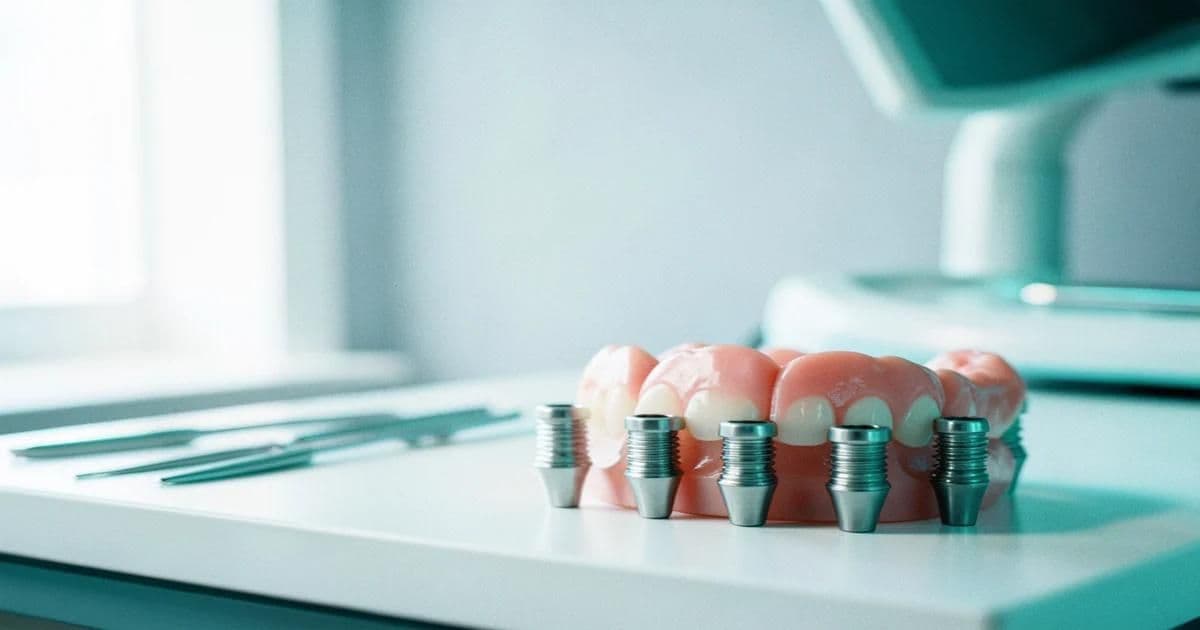
All-on-6 is an advanced restoration that fixes a permanent full-arch prosthesis onto six titanium implants placed strategically in each jaw. Compared to All-on-4, the extra implants provide greater stability — particularly in the upper jaw and in patients with moderate bone loss.
| Feature | Detail |
|---|
| Treatment Type | Fixed full-arch implant prosthesis |
| Implants Per Jaw | 6 titanium implants |
| Materials Used | Titanium implants + zirconia or acrylic prosthesis |
| Number of Visits | 2 visits (3–6 months apart) |
| Total Treatment Duration | 4–7 months (including healing) |
| Clinical Success Rate | 94–98% (10-year follow-up, PMC11416373) |
| Longevity | Implants 20+ years, prosthesis 10–15 years (zirconia) |
| Candidate Profile | Moderate to advanced tooth loss, sufficient bone density |
| Recovery Period | First week soft diet, 3–6 months osseointegration |
| Cost Advantage | Significantly lower than home country private prices |
All-on-6 is an advanced restoration technique where a permanent full-arch bridge is fixed onto six titanium implants placed at strategic angles in each jaw. According to 20-year meta-analyses, the dental implant survival rate is 99.3% at year one and 92% at year twenty (PMC11416373).
The technique is built on the principle of load distribution. Six implants spread chewing forces across six points rather than four, reducing the stress on each individual implant. This is a significant advantage in the upper jaw especially, where bone density is naturally lower.
For a broader perspective on dental implants, see our Dental Implants in Turkey guide.
The clinical rationale for six implants over four is straightforward: redundancy. If one implant fails to osseointegrate for any reason, the remaining five can still support the bridge. With All-on-4, a single implant failure may require the entire prosthesis to be redesigned.
In our clinical experience, we recommend All-on-6 in around 65% of upper jaw cases. The reason is that the upper jawbone (the maxilla) is more porous and softer than the lower jaw — six implants create a far more reliable foundation in that anatomy.
The posterior (back) implants are also placed at an angle near the sinus cavity to make maximum use of available bone. This means many patients avoid additional surgical procedures like sinus lifts.
One of the biggest quality-of-life advantages of All-on-6 is immediate loading. A temporary acrylic prosthesis is fixed to the implants on the day of surgery. You leave the clinic with teeth.
That temporary prosthesis is not your final restoration, however. Osseointegration — the biological process of the implants fusing with the jawbone — takes 3–6 months. Once complete, your permanent zirconia or acrylic prosthesis is fabricated and fitted (PMC10852098).
The core difference between All-on-4 and All-on-6 is the number of implants and the load distribution that follows. All-on-4 supports a full-arch prosthesis on four implants; All-on-6 uses six, offering greater stability and long-term reliability — particularly in the upper jaw and in patients with bone loss.
| Feature | All-on-4 | All-on-6 |
|---|
| Implants | 4 per jaw | 6 per jaw |
| Bone Requirement | Less bone needed | Moderate bone density required |
| Upper Jaw Suitability | Suitable, but limited bone support | Superior — more contact points |
| Load Distribution | 4 points | 6 points — less stress per implant |
| Redundancy | One implant failure is critical | One implant failure, bridge can be maintained |
| Surgery Duration | Shorter (~2–3 hours) | Slightly longer (~3–4 hours) |
| Cost Difference | More economical option | Slightly higher investment |
| Long-Term Stability | Good | Excellent |
All-on-4 may be the better fit if you have sufficient bone density in the lower jaw, want to minimise surgical time, or have budget as a priority.
All-on-6 delivers better outcomes if you're planning upper jaw treatment, have moderate bone loss, or want maximum stability and long-term reliability.
For a full breakdown of the alternative, see our All-on-4 Dental Implants Turkey guide.
Our clinical recommendation: All-on-6 for the upper jaw, All-on-4 or All-on-6 for the lower — but this is a general rule, not a prescription. The final decision comes after a CT scan and bone density assessment.
All-on-6 dental implants are suitable for adult patients with advanced tooth loss who have sufficient bone volume at all six implant positions. Uncontrolled systemic conditions, active periodontal infection, or severe bone loss can all be barriers to treatment.
General characteristics of a good All-on-6 candidate:
- Complete tooth loss, or most teeth lost or beyond saving
- Sufficient bone density at all six implant positions on CT scan
- Healthy gums (no active periodontal disease)
- Non-smoker, or committed to quitting at least 4 weeks before treatment
- Controlled diabetes (HbA1c below 7%)
- General health suitable for anaesthesia
The most common unsuitable candidate we see in clinic is a patient with uncontrolled diabetes combined with heavy smoking. Together, these two factors substantially reduce osseointegration success.
Situations where All-on-6 is not appropriate:
- Severe bone loss: If there isn't enough bone at all six positions, grafting may be needed first
- Uncontrolled diabetes: Implant failure risk increases significantly when HbA1c is above 8% (PMC7536094)
- Heavy smoking: Patients smoking 10+ cigarettes a day who are unwilling to quit
- Bisphosphonate therapy: Patients taking bisphosphonates for osteoporosis face a risk of jaw bone necrosis
- Active periodontal disease: Must be treated first
If your bone density is insufficient, a Dental Bone Graft in Turkey can increase bone volume and make you suitable for implant treatment.
Upper vs lower jaw: The upper jawbone (maxilla) is less dense and more porous than the lower jaw, and its proximity to the sinus cavity affects surgical planning. This is why All-on-6 is chosen more often for the upper jaw — the extra two implants compensate for lower bone density.
All-on-6 treatment in Turkey is typically completed across two separate visits. The first visit covers the surgery and temporary prosthesis (3–5 days), followed by 3–6 months of healing at home. The second visit is when the permanent prosthesis is fitted (5–7 days).
Most of our patients plan 4–5 days for the first visit.
Day 1 — Assessment and Planning:
- Panoramic X-ray and 3D CT scan
- Bone density analysis and implant position planning
- Digital impressions and temporary prosthesis design
- Treatment plan approval and pre-surgical instructions
Day 2 — Surgical Procedure:
- Local anaesthesia (or sedation if preferred) administered
- Six titanium implants placed at strategic angles
- Temporary acrylic prosthesis fixed on the same day (immediate loading)
- Initial post-operative instructions and prescription
Days 3–5 — Recovery and Check:
- Post-operative check-up
- Dietary instructions (soft food phase)
- Dressing change if needed
- Final check before flying home
After leaving Turkey, the 3–6 month osseointegration process begins. During this time, the implants biologically fuse with the jawbone.
- First 2 weeks: Swelling and mild discomfort are normal; soft food diet
- 2–6 weeks: Gradual transition back to normal foods
- 3–6 months: Osseointegration completes; remote check-ins with the clinic
Your dentist at home can carry out check-up appointments during this period. At BestDent, we coordinate ongoing care with our partner dentists in the UK.
To prepare for your trip to Turkey, our Preparing for Dental Treatment in Turkey guide walks you through everything.
The second visit typically runs 5–7 days.
Days 1–2: Digital and physical impressions, shade and shape selection
Days 3–5: Permanent prosthesis fabrication (zirconia or acrylic hybrid)
Days 5–6: Prosthesis fitting, occlusion (bite) adjustment
Day 7: Final check, care instructions, clearance to fly
Material choice for an All-on-6 prosthesis directly affects long-term success, aesthetics, and durability. Monolithic zirconia prostheses have a five-year survival rate of 93.7%, compared with 83% for acrylic hybrid prostheses (PubMed 32142577).
An acrylic (PMMA) hybrid prosthesis is made with acrylic teeth and gum material layered onto a metal substructure. It is lighter, easier to repair, and has a lower initial cost.
The downsides are real though: the acrylic surface wears down in 5–7 years, it discolours more easily, and it is less resistant to chewing forces than zirconia.
When it makes sense: As a first prosthesis for budget-conscious patients, or as a semi-permanent solution after immediate loading.
Zirconia is the closest material to the look of natural teeth. Single-piece (monolithic) fabrication keeps fracture risk minimal. The 10-year survival rate exceeds 95%.
Why you'd choose zirconia:
- Closest aesthetic match to natural teeth
- Resistant to staining and discolouration
- 2–3 times the lifespan of acrylic
- Surface is less prone to plaque retention
The trade-off: if zirconia is damaged, repair is more involved than with acrylic, and the initial investment is higher. Over the long term it is the more economical choice.
For more on zirconia as a material, see our Dental Crowns in Turkey guide.
| Feature | Acrylic Hybrid | Monolithic Zirconia |
|---|
| Durability | 5–7 years | 15–20+ years |
| Aesthetics | Good | Excellent (natural tooth appearance) |
| Ease of Repair | Easy and fast | Difficult, usually requires remake |
| Weight | Light | Medium |
| Stain Resistance | Low | High |
| 5-Year Survival | 83% | 93.7% |
| Initial Cost | Lower | Higher |
| Long-Term Cost | Higher (requires replacement) | Lower |
Like any surgical procedure, All-on-6 carries risks. A 94–98% ten-year success rate is excellent — but understanding the possible complications and taking steps to prevent them has a direct bearing on your outcome. Most patient guides skip this section. We don't.
The complication we see most often in clinical practice is peri-implantitis — inflammation of the tissue around an implant.
- Peri-implantitis: Around 9% at implant level, ~20% at patient level. Smoking, poor oral hygiene, and uncontrolled diabetes are the main risk factors (PMC7536094)
- Implant failure: 2–5% over a ten-year period. Usually occurs during the osseointegration phase (first 3–6 months)
- Prosthetic complications: Cracking or fracture with acrylic prostheses, screw loosening. Less common with zirconia but it does happen
- Nerve damage: Rare but serious in the lower jaw. Can cause numbness in the chin or lip
- Sinus complications: Risk of sinus membrane perforation with posterior upper jaw implants
Minimising complication risk requires you and your surgeon to work together:
- Choose a premium implant brand: Stick with clinically documented brands like Straumann and Nobel Biocare
- Stop smoking: No smoking for at least 4 weeks before treatment and 3 months after
- Maintain oral hygiene: Daily care plus professional cleaning every 6 months
- Attend regular check-ups: Every 3 months in year one, then every 6 months
- Choose an experienced surgeon: Look for a clinic that performs 50+ full-arch implant cases per year
For more on dental treatment safety in Turkey, see our Is Dental Work Safe in Turkey? article.
Peer-reviewed research gives a clear picture of dental implant survival:
- 1 year: 99.3% survival (PMC11416373)
- 5 years: 97.1% survival
- 10 years: 94–98% survival (PMC8359846)
- 20 years: 92% survival
These figures come from long-term clinical studies tracking 10,871 implants worldwide. In All-on-6 specific studies, the load distribution advantage of six implants has been reported to push success rates towards the upper end of those general figures.
The American Academy of Implant Dentistry (AAID) has documented the eight most common problems in All-on-X systems in detail (AAID).
Choosing the right clinic in Turkey for All-on-6 treatment is the single most important decision you'll make. International certifications, the implant brand used, and clinical experience are the three things to check.
- JCI (Joint Commission International): The gold standard accreditation for healthcare organisations worldwide
- ISO 9001: Quality management system certification
- Turkish Ministry of Health Licence: A legal requirement — avoid any clinic operating without one
- Health Tourism Authorisation Certificate: Mandatory for clinics treating international patients
Before treatment, always ask: "Which implant brand do you use, and do you provide an implant passport?"
Implant brands fall into three broad categories:
- Premium: Straumann (Switzerland), Nobel Biocare (Sweden) — the most extensively documented clinically
- Mid-range: Osstem (South Korea), MIS (Israel) — good clinical outcomes, more accessible
- Economy: Chinese and Indian-origin brands — limited clinical data backing
Using a premium brand directly improves your long-term success rate. Straumann and Nobel Biocare implants are documented at 97%+ success rates over more than a decade.
Avoid clinics that:
- Won't disclose which implant brand they use
- Show certifications on their website that can't be independently verified
- Make unrealistic promises ("new teeth in one day, zero risk")
- Apply aggressive discount pressure or use "limited offer" marketing
For a detailed guide on clinic selection: How to Choose a Dental Clinic in Turkey
To compare the top clinics: Best Dental Clinic in Turkey
All-on-6 implant care follows the same logic as natural tooth care: daily oral hygiene and regular professional check-ups. A reputable clinic should offer a 5–10 year implant warranty and a 2–5 year prosthesis warranty. The real question is: if something goes wrong after you're back home, what happens next?
The first 48 hours are the most critical:
- Swelling: Normal, reduces over 3–5 days. Apply ice
- Pain: Manageable with prescription pain relief. Usually settles within 3–4 days
- Diet: Soft foods for the first 2 weeks (soup, mashed vegetables, yogurt). Avoid hard, crunchy, or sticky food
- Oral hygiene: Chlorhexidine mouthwash, gentle brushing with a soft toothbrush
- Activity: Avoid heavy exercise for the first 3–5 days
For your implants to last 20 years or more:
- Brush twice daily with a soft-bristle toothbrush
- Use a Waterpik or interdental brush to clean around the implants
- Professional cleaning every 6 months
- Annual panoramic X-ray
- No smoking — it triples the risk of peri-implantitis
A detailed care guide: Dental Implant Aftercare
What a solid warranty looks like from a reputable clinic:
- Implant warranty: 5–10 years (free replacement if an implant fails)
- Prosthesis warranty: 2–5 years (material defect or premature wear)
- Warranty conditions: Compliance with regular check-up and care instructions
If a problem arises after you're back home:
- Remote consultation: Assessment via WhatsApp or video call
- Local dentist coordination: At BestDent, we coordinate care with partner clinics in the UK and across Europe
- Warranty return: For serious complications, return to Turkey under warranty for treatment at no cost
At BestDent, we provide a 5-year warranty and 24/7 English-language support for all our patients.
At BestDent, we take a conservative approach to All-on-6. Rather than applying the same treatment plan to everyone automatically, we start with a thorough assessment to establish what you actually need.
Materials we use:
- Straumann (Switzerland) and Nobel Biocare (Sweden) premium implants only
- Monolithic zirconia is our default prosthesis recommendation — acrylic hybrid is also available based on patient preference
- Every patient receives an implant passport
Our certifications:
- JCI accreditation
- ISO 9001 quality management system
- Turkish Ministry of Health Health Tourism Authorisation Certificate
What our all-inclusive package covers:
- Airport transfer and hotel coordination
- All consultations, tests, and imaging
- Surgical procedure and temporary prosthesis (first visit)
- Permanent zirconia prosthesis (second visit)
- 5-year warranty
- 24/7 English support line
- Coordinated follow-up with partner dentists in the UK
A note on our approach: We use 3D CT scanning and digital surgical planning for every patient. We don't make unrealistic promises, and we're upfront about the limitations and alternatives. If All-on-4 is the better choice for a patient, we say so.
Interested in a free consultation for All-on-6 treatment? Message Us on WhatsApp or Book a Free Online Consultation.
| Choose All-on-6 | Consider an Alternative |
|---|
| Planning upper jaw treatment | Lower jaw with sufficient bone (All-on-4 may be enough) |
| Moderate bone loss | Severe bone loss (grafting needed first) |
| Want maximum stability and redundancy | Budget is the primary factor |
| Looking for the most reliable long-term result | Prefer shorter surgery time |
All-on-6 dental implants, when performed with proper patient selection and an experienced team, are one of the most reliable solutions for full tooth loss — with a 94–98% success rate at ten years. The major advantage of having this treatment done in Turkey is accessing the same quality of care at significantly lower cost than private prices at home.
For a comparison of treatment costs and standards, see our Dental Treatment: Turkey vs UK article. You can also explore Dental Bridges in Turkey as an alternative option.
Get in touch for a free consultation. Message Us on WhatsApp | Book an Online Appointment
This guide was prepared by the BestDent clinical team and reviewed for medical accuracy. Content is based on peer-reviewed clinical research (PMC, PubMed, AAID) and years of clinical experience. Last updated: April 2026.